On 10-11 April 2025, UCLA’s Global Antiquity initiative hosted its second symposium, “Whither Global Antiquity? Retrospection and Future Directions.” Mathias Hanses and I presented a paper which previews our in-progress book project, Cicero and the Rhetorics of Race. The recording is now available below and on YouTube. For the recordings from the rest of the symposium: https://globalantiquity.ucla.edu/video-library/
Mathias and I went on to give two subsequent papers on aspects of the project in the summer of 2025. We presented a paper entitled “Cicero’s Dream of Africa” at the Classics &/in Africa conference held at University College London (July 3, 2025), and another paper “Cicero and the Racecraft of Roman Slavery” at a panel organized by Jessica Clark and Dominic Machado at the Celtic Classics Conference in Coimbra, Portugal (July 18, 2025).
I’m delighted to share this interview I did with Lexie Henning! I think it’s probably the most personal interview I’ve ever done, touching on how my early academic experiences have ultimately led me to my current focus on race in antiquity and the disciplinary inequities of Classics. Around 20 mins in there’s a reference to this 2024 piece co-authored with Mathias Hanses, the first piece in our collaborative research project on Cicero and race.
In February for Black History Month, I had a daily practice of posting to Bluesky on the hashtag #AncientBlackness, where I shared resources on ancient representations of blackness, the work of Black classicists, and Africana receptions. I took some time every morning before work to collect some pieces from my teaching and research over the last few years, inspired by the work of the many colleagues and collaborators who are cited throughout. Read the full thread here:
For #BlackHistoryMonth this year, I’m going to be posting daily about: representations of blackness in Greco-Roman antiquity, the history of scholarship by Black classicists, and the history of Africana receptions using the hashtag #AncientBlackness. Join me. https://bsky.app/profile/opietasanimi.com/post/3lh4p2jjnjc22
Many of my examples will come from what we have called the “classical” tradition, but I encourage people who work on global antiquities to contribute to #AncientBlackness as a hashtag.
Racist projections have historically shaped the study of ancient blackness, but disaggregation of terms shows that the concept is historical (i.e., black people existed in antiquity) but not transhistorically stable (i.e., “blackness”/“Blackness” depend upon historical context). #AncientBlackness
There is an abundance of representation of blackness in the Greek and Roman artistic record. Frank M. Snowden, Jr. (1911-2007) painstakingly collected objects (and texts) representing #AncientBlackness, but his work was never fully metabolized by the mainstream of classical scholarship.
Patrice Rankine (2011: 53) has noted that “The many wonderful images of ‘blacks’ in antiquity that grace the pages of Snowden’s books tend not to find their way into textbooks on Greek art” https://academic.oup.com/book/3616
In 2022, Najee Olya, conducting an overview of how Greek representations of black Africans are systematically omitted from museum displays and art survey textbooks, stated that “Rankine was correct ten years ago, and still is now.” #AncientBlackness
With that in mind, today’s object is an Attic amphora (c. 535 BCE). One side represents Memnon, King of Aethiopia, in the style of a generic Greek hero while his attendants are figured as Aethiopian fighters. British Museum (CC BY-NC-SA 4.0) #AncientBlackness https://www.britishmuseum.org/collection/object/G_1849-0518-10
Attic amphora (c. 535 BCE) depicting Memnon, King of Aethiopia, with Aethiopian attendants. Image: British Museum (CC BY-NC-SA 4.0).
[2] Memnon as King of Aethiopians appeared early in the Greek literary record. The now lost Aethiopis–part of the ancient Epic Cycle which told the story of the Trojan war–told the story of Memnon and Aethiopians coming to help the Trojans. #AncientBlackness https://en.wikipedia.org/wiki/Aethiopis
Homer’s Odyssey begins (1.22-26) with the god Poseidon feasting and spending time with the blessed Aethiopians at the remote edge of the known world. At the end of the Iliad (23.206), Iris tells the winds that she must return to the sacred feast in Aethiopia. #AncientBlackness
Homer tells us that Olympians were fond of visiting the Ethiopians, where he remained for twelve days. Poseidon also visited the distant Ethiopians to receive a hecatomb of bulls and rams. At the end of the Iliad Iris informs the winds that it is not possible for her to remain but that she must return to the streams of Ocean in order to participate in a sacred feast offered by the Ethiopians. Hence, the goddess makes a special trip alone.
Snowden 1970: 144
In the spring of 1977, Romare Bearden’s Odysseus collages premiered at Cordier & Ekstrom Gallery on the Upper East Side, New York. Albert Murray described Bearden’s Odysseus series as a “visual equivalent of the blues.” #AncientBlackness
In “Inscription at the City of Brass,” an interview with Charles Rowell (1988: 428-446), Romare Bearden said that Poseidon “always has to come up from Africa, where he wants to be with his friends there.” #AncientBlackness https://www.jstor.org/stable/2931510?origin=crossref
[3] There are many ancient words for what is today called Africa. Greek sources typically referred to ⅓ of the known world as “Libya” (e.g., Herodotus 4.45; 5th c. BCE). Romans also used the term “Africa”: the earliest attestation in Latin is in the poetry of Ennius (3rd-2nd c. BCE) #AncientBlackness
Ancient sources speak of Aethiopia as a mythical/imaginative landscape as well as a physical location spanning the south of modern Egypt and north of modern Sudan (Derbew 2022: 12, cf. 98, 168). Αἰθίοψ/Aethiops also appears as a generic term for a black person #AncientBlackness
The term “Aethiopian” (Greek: Αἰθίοψ [Aithiops], Latin: Aethiops) combines two Greek words: αἴθω [aithō] “I burn,” “I blaze” + ὄψ [ops], “face.” Sarah Derbew (2022: 14) emphasizes the concept of “blazing” (i.e., bright, shining heat) over simply “burning” in its etymology #AncientBlackness
Greek writers also used the color term “black” (μελάγχιμος [melangchimos], μελάγχρως [melangchrōs] of a variety of peoples including Egyptians, Indians, and Aethiopians (Derbew 2022: 14, cf. 172). Romans also used Latin color terms for “black” or “dark,” e.g. fuscus #AncientBlackness
Asclepiades (Anth. Pal. 5.210.3-4; 3rd c. BCE) praises a woman called Didyme for her radiant blackness: “And if she is black (μέλαινα [melaina]), what difference to me? So are coals but when we light them, they shine like rose-buds,” translated by Snowden (1970: 178-179) #AncientBlackness
Quiquis amat nigra(m) nigris carbonibus ardet. Nigra(m) cum video mora libenter ed<e>o
“Whoever loves a bright black woman burns with black coals. When I see a bright black woman, I gladly eat blackberries.”
Graffito (CIL 4.6892). Translated by Haley 2009: 47.
Bonus for today, as I’m in the office and can share some of the books I’m drawing on for the daily #AncientBlackness posts (we will discuss Snowden’s view of blackness as “before color prejudice”)
Photograph of a desk with the following books (and a vase with hydrangeas): Frank Snowden, Blacks in Antiquity (1970); Frank Snowden, Before Color Prejudice (1983); David Bindman, Henry Louis Gates, Jr., Karen C. C. Dalton, The Image of the Black in Western Art (2010); Sarah Derbew, Untangling Blackness in Greek Antiquity (2022).
[4] Terminology is a fraught issue in the history of the study of #AncientBlackness. The problem is ultimately rooted in the fact that scholarship on (and museum curatorship of) ancient objects representing blackness have historically projected modern racial politics onto Greco-Roman antiquity.
Sarah Derbew treats this issue thoroughly in her recent book, Untangling Blackness in Greek Antiquity (2022), but discussed the problem as early as 2018 in a blog for the Getty: “An Investigation of Black Figures in Classical Greek Art.” #AncientBlackness https://www.getty.edu/news/an-investigation-of-black-figures-in-classical-greek-art/
In this blog post, Derbew (2018) presents an analysis of museum labels and secondary scholarship, demonstrating the ways in which didactic labels and catalogue descriptions have been informed by racial assumptions deeply rooted in the history of the transatlantic slave trade.
One object discussed by Derbew (2018) is a janiform drinking cup (c. 510-480 BCE) currently in the Boston MFA which has been interpreted to represent two female faces. #AncientBlackness https://collections.mfa.org/objects/153959
Derbew’s book (2022) argues that these kinds of janiform cups assert a relationship between brownness and blackness, not a contrast between “whiteness” and blackness. Yet the didactic on the Boston MFA website *still* aligns Greekness with whiteness (“white, i.e. Greek”) #AncientBlackness https://collections.mfa.org/objects/153959
DESCRIPTION The joining of black and white female heads is unusual. On black-figure vases, white (i.e. Greek) women are often painted with the same white slip (liquid clay) as that used on the mouth of this cup, but on head vases they are always left in the reddish and the more lifelike color of the clay, heightened somewhat by a wash of yellow ochre, so the flesh is red, eyes white, and the iris black. The African woman smiles with her teeth showing; her eyes and eyebrows are white. Her hair is a mass of dots, with traces of red paint. [https://collections.mfa.org/objects/153959]
The Boston MFA didactic ^ also heavily privileges the so-called “white” side of the janiform cup; a significant privileging given the fact that the whole point of such cups is a form of dialogue #AncientBlackness
One of the objects discussed by Gaither, et al., is an object long catalogued as a “Portrait of an African Boy.” As the object is ungrounded (to use Marlowe 2013’s terms), identification as “African” relies on perception, not historical context #AncientBlackness https://www.getty.edu/art/collection/object/103SV7
“Portrait of a Child” (150-200 CE). Image: Getty, Public Domain.
While thoughtfulness (esp. in regards to “ungrounded” material culture) is particularly needed in the analysis of such objects, unclassifying ancient objects formerly identified as representations of “Africans” may also have the unintended effect of “white-washing” antiquity… #AncientBlackness
Wall painting depicting Dido? (center) flanked by two personified representations of Africa. Left: a dark-skinned woman with textured black hair holding ivory; right: light-skinned woman with an elephant headdress. Between “Dido” and the figure of the left is a light-skinned woman who may represent an enslaved attendant. In the background: a ship leaves. Museo Archeologico Nazionale di Napoli 8898. Image: Wikimedia, CC-BY-SA-3.0 (Sailko).
As @maggiecknapp.bsky.social notes, interpretations have been speculative, often without considering contextual ancient evidence. Three women in the foreground may together represent a Roman view of Africa #AncientBlackness
As such, this fresco might be a representation of Aeneas abandoning Dido. By this reading, the central figure becomes Dido, Queen of Carthage, flanked by two women who allegorize Africa. #AncientBlackness
The romance between Dido and Aeneas in Vergil’s Aeneid is explicitly described as a denial of African courtship. In Bk 4, King Iarbas, King of Gaetulia, prays to Jupiter in anger at Dido’s preference for Aeneas as a foreign suitor #AncientBlackness
As @maggiecknapp.bsky.social notes, elephant headdresses are a standard visual marker for “Africa” in Roman art. Here, e.g., Hadrian’s gold coin showing the submission of personified Africa, a woman with elephant headdress #AncientBlackness https://bsky.app/profile/maggiecknapp.bsky.social/post/3lhfug3om5s24
Scholars have increasingly viewed Dido as a racialized figure. The most famous and influential treatment is by Shelley P. Haley (2009) “Be Not Afraid of the Dark: Critical Race Theory and Classical Studies” #AncientBlackness https://ms.fortresspress.com/downloads/0800663403_Chapter%20one.pdf
[6] Yesterday, I briefly referenced a famous piece by Shelley P. Haley, whose contributions to the study of blackness in antiquity were profound for classics and premodern race more generally. https://en.wikipedia.org/wiki/Shelley_Haley #AncientBlackness
Shelley P. Haley’s critical research has applied intersectional lenses to the Greco-Roman representations of “foreign” women whose gender is racialized: Sophoni(s)ba (1990), Cleopatra, Dido, and Scybale (1993, 2009), and Medea (1995). #AncientBlackness
In 2021, Haley gave a lecture for the first @acmrs.bsky.social RaceB4Race conference to include classicists alongside scholars of premodern race, “Re-imagining Classics: Audre Lorde was Right” #AncientBlackness
In this lecture ^, Haley discusses Audre Lorde’s recollection of the violence of the Latin instruction in “Zami” (1982) by the monsignor, Father Brady, who did not want to teach Latin to Black children. The lowercase “latin” is a deliberate poetic resistance #AncientBlackness https://youtu.be/B7sUaGWDiWc?t=1376
I did not care about his lechery but I did care that he kept me in every Wednesday afternoon after school to memorize latin nouns. … I came to loath Wednesday afternoons, sitting by myself in the classroom trying to memorize the singular and plural of a long list of latin nouns and their genders. Every half-hour or so, Father Brady would look in from the rectory and ask to hear the words. If I so much as hesitated over any word or its plural, or said it out of place on the list, he would spin on his black-robed heel and disappear for another half-hour or so. Although early dismissal was at 2pm, some Wednesdays I didn’t get home after four o’clock. Sometimes on Wednesday nights I would dream of the white, acrid-smelling mimeograph sheet: agricola, agricolae, fem., farmer. Three years later when I began Hunter High School and had to take latin in earnest, I had built up such a block to everything about it that I failed my first two terms of it.
Passage from Audre Lorde’s Zami (1982: 60), quoted and discussed by Shelley P. Haley in her RB4R lecture (2021)
In 2021, Haley gave the Adam Parry and Anne Amory Parry Lecture at Yale and remarked on her own experiences of racialized gender within the field of classics #AncientBlackness:
One of the most frustrating questions I have received throughout my career is: ‘Which oppression has hindered you more in classics? Racism or sexism?’ The prescient work of the Combahee River Collective in their statement, and the advent of critical race feminist theory has helped me and other Black indigenous women of color formulate responses which deconstruct such questions and reconstruct the totality of our limited experiences. One such reconstruction is the concept of racialized gender. In discussions about systemic oppression, the broader framework of racialized gender can be specified as gendered racism or racialized sexism
I undertake the comparison of a canonical piece of Western literature (Euripides’ Medea) and a masterpiece of the literature of an oppressed people (Morrison’s Beloved) with some unease. Morrison’s own warning reverberate in my head: “Finding or imposing Western influences in/onAfro-American literature has value, but when its sole purpose is to place value only where that influence is located it is pernicious.” [=Morrison 1989: 10] As a traditionally-trained classicist, it is tempting to do such comparative work and easy to slip into the trap Morrison describes. As a Black feminist it is a political act to resist the pernicious aspects of the work.
Haley 1995: 177
[7] Haley (1993, 2009) also addressed an understudied ancient text called Moretum, a short mock epic once attributed to Vergil. This poem tells the story of a poor farmer, Simulus, making a modest meal, the cheese-herb dish called moretum, with an enslaved African woman, Scybale. #AncientBlackness
The two figures of Moretum, Simulus and Scybale, both have “parody” names of mock epic: Simulus = “snub-nosed” (Greek σιμός [simos]; an adj used of Aethiopians by Xenophanes); Scybale = “trash,” “excrement” (σκύβαλον [skybalon]). But only Scybale’s physical appearance is described #AncientBlackness
The description of Scybale (lines 31-35) identifies her as “African in race” (Afragenus), with “her whole form a testimony to her country” (tota patriam testante figura). The following parts of her body are listed: hair, lips, skin color, chest, breasts, stomach, legs, feet #AncientBlackness
Scybale is described as “dark in color” (fusca colore); a similar Latin phrase (colore fusco) is used by Suetonius (Life 5) to describe Terence the African (Terentius Afer), a formerly enslaved poet from Carthage who wrote Roman comedies #AncientBlackness
Scybale is also identified in the poem as a famula (line 91), one of several Latin words for “slave.” The Romans themselves derived famulus/famula from the Oscan word for an enslaved person, famel. The word familia (“household,” i.e. including slaves) derives from this #AncientBlackness
Haley’s major contribution to discussion of this poem was revealing how modern translations of this text had leaned into (indeed: overemphasized) the language of racial caricature. #AncientBlackness
While clearly racecraft is at work in this ancient poem, modern translations insensitively assented to its premise while adding further prejudice. Haley particularly critiques the translations of Frank Snowden (1970) and Lloyd Thompson (1989), and offers her own new translation (2009: 42) #AncientBlackness
I provide the Latin and my translation of the description of Scybale. It is important to note that most translations of this piece have been done by men influenced by stereotypical descriptions of the physique of African women. Consequently, I have deliberately made my rendering as sensitive to black-feminist and female-empowering concerns as the Latin will allow:
Erat unica custos, Afra genus, tota patriam testante figura, torta comam, labroque tumens et fusca colore, pectore lata, iacens mammis, compressior alvo, cruribus exilis, spatiosa prodiga planta. (Moretum 31–35)
“She was his only companion, African in her race, her whole form a testimony to her country: her hair twisted into dreads, her lips full, her color dark, her chest broad, her breasts flat, her stomach flat and firm, her legs slender, her feet broad and ample.”
Haley 2009: 42
Essentially, Haley identified a textual equivalent to the problem of terminology which Derbew and Olya have more recently addressed. With translation: how can scholars “correctly” render ancient racial language without doubling down or assenting to it? #AncientBlackness https://bsky.app/profile/opietasanimi.com/post/3lheajyipjs2o
Haley (2009: 41) particularly critiqued Snowden (1970: 9), who stated: “The author of the Moretum, who described Scybale, would be rated today as a competent anthropologist.” Najee Olya (2021) has also recently critiqued Snowden for placing Scybale into an objectifying anthropology #AncientBlackness
It’s important to pay attention to these critiques of Snowden because mainstream classicists either ignore his work completely, or else put a footnote into their work generally gesturing to his–not knowing or really caring that his own methods might need updating #AncientBlackness
[8] Black African figures appear across Latin literature from its beginning. Plautus’ Poenulus describes Giddenis’ blackness as well as her beauty (1112-13); Terence’s Eunuchus refers to a “little slave girl from Aethiopia” (165-7); and Terence himself is described as black by Suetonius (Life 5).
Haley’s attention to Scybale in the Moretum was an attempt to redress prejudicial scholarly interest in the character’s objectification. However, few scholars of Latin literature paid close attention to Haley’s intervention #AncientBlackness
In “The Moretum Decomposed” (2001: 418), Nicholas Horsall referred to the presence of Scybale, an enslaved African woman in Italy, as “an impenetrable mystery.” This piece was reprinted in a recent collection, “Fifty Years at the Sibyl’s Heels” (2020) #AncientBlackness
A recent article by Franceca Bellei (2024) gives a fresh treatment to Scybale in the Moretum, returning to and affirming the significance of Haley’s initial treatment. Bellei’s piece emphasizes Haley’s right to make an interventionist translation which redresses both modern and ancient prejudices #AncientBlackness https://muse.jhu.edu/pub/1/article/925502/pdf
[9] There has been a history of classical scholarship viewing representations of blackness as representations of enslavement, projecting the history of transatlantic slave trade onto Greco-Roman antiquity. By this view, slavery is the fate of blackness #AncientBlackness https://bsky.app/profile/opietasanimi.com/post/3lheakufoq22o
Representations of black people in antiquity does not automatically amount to representations of slavery. Yet Greeks and Romans were enslavers, and they did enslave peoples whom they viewed to be “foreign” or “external” to them #AncientBlackness
There was an ancient belief that “enslavable” peoples deserved to be converted into “animate objects” or “tools” (Aristotle Politics 1.2.4, Varro Rust. 1.17.1). Emily Greenwood (2022) has recently modeled a scholarly mode which does not simply agree to ancient theories of enslavement #AncientBlackness https://muse.jhu.edu/article/862240/pdf
Ancient theories of enslavement viewed a wide range of peoples as “enslaveable.” Aristotle’s belief in natural slavery (i.e., some people “deserved” to be free; others “deserved” to be slaves) granted the right to enslave to the appropriately civilized man #AncientBlackness
[10] Within this framework, many different ethnic and racial “others” were viewed as enslaveable. By the Roman era, we find Cicero repeatedly naming different peoples as born for enslavement (e.g., Prov. cons. 10); claiming freedom as exclusive to Romans (Phil. 6.19; cf. Phil.10.20) #AncientBlackness
In recent posts, we have examined references to enslaved and formerly enslaved black figures: e.g., Scybale in the Moretum; Suetonius’ description of the African poet, Terence. Enslaved black characters do appear somewhat regularly in Latin literature #AncientBlackness
E.g., Petronius’ depiction of Trimalchio’s dinner in the Satyricon (34.4) included enslaved Aethiopian attendants. Later in the Satyrica (102.13), Petronius refers to “slave Aethiopians” (servi Aethiopes) during his staging of a conversation between Encolpius and Giton #AncientBlackness
Debra Freas (2024) has recently discussed representations of blackness in Petronius, contextualizing these passages within the history of scholarship on ancient race #AncientBlackness https://muse.jhu.edu/pub/1/article/925499/pdf
[11] Phillis Wheatley Peters was the 1st poet of what came to be the African American tradition. Peters was enslaved in West Africa when she was 7 or 8 years old and sold to the Wheatley family in Boston, where she wrote classicizing poems whose publication would lead to her freedom #AncientBlackness
Phillis Wheatley Peters’ Poems on Various Subjects, Religious and Moral (1773) has a now iconic image of the poet making compositions at her writing desk https://digital.tcl.sc.edu/digital/collection/pwp/id/5 #AncientBlackness
Frontispiece to Phillis Wheatley Peters’ Poems on Various Subjects, Religious and Moral (1773). Image: University of South Carolina Library, Public Domain.
The poet has long been known as Phillis (or Phyllis) Wheatley. But In her final public statement (Sept. 1784), a proposal to publish a second volume of poetry, the poet referred to herself as “PHILLIS PETERS, formally PHILLIS WHEATLEY.” #AncientBlackness
Scholars have increasingly taken this statement as indication that she wished to be known as Phillis Peters. Honorée Fanonne Jeffers’ The Age of Phillis (2020) is dedicated to “Phillis Wheatley Peters.” #AncientBlackness
The name “Phillis Wheatley” is itself a record of the processes of mass slavery: “Phillis” was the name of the slave ship which brought her to America, “Wheatley” the name of the family which enslaved her; see Sharpe 2016, 43–4. We do not know the poet’s original name. #AncientBlackness https://read.dukeupress.edu/books/book/4/In-the-WakeOn-Blackness-and-Being
[12] Phillis Peters’ poetry is classicizing, i.e., it draws on Greek and Roman literary precursors. Scholars of Black Classicism have particularly focused on “To Maecenas” and “Niobe” #AncientBlackness
Peters was responding to a general 18th c interest in neoclassicism, but she also knew Latin: Peters’ knowledge of Latin is referenced in the prefatory letter to the collection composed by her enslaver, John Wheatley (Nov. 14, 1772) #AncientBlackness
Peters’ wrestling with problem of classicism led to a history within the Black critical tradition of viewing her neoclassicism as a merely derivative capitulation to white oppression. Greenwood ^ addresses this difficulty, and the repeated motifs of “mimicry” adduced to the poet #AncientBlackness
Amidst this tradition, the contemporary Black feminist poet, Alexis Pauline Gumbs (2018, 122) views Peters’ excellence as independent of circumstance: #AncientBlackness
For Phillis. what she needed was the heat. not the cute little desk in the portrait. not the windowed room looking out on Cambridge, not the white mother mistress to believe in her. what she needed was the heat, and without it she died. and it was the crossing that stole from her her own lungs. ocean miles away from the first heat that held her. knots in her chest ever tightened. her own breath forever linked to the oxygen tank of western inspiration. her Jesus like a breathing tube plugging her open nose. wherever she was she would have drunk knowledge like a whale. processed poetry with her rushing heart. wherever she was her every breath was made for prayer. and she was here. so this is what it looked like.
Gumbs 2018: 122
[13] Phillis Wheatley Peters’ “To Maecenas” is the first poem in the 1773 collection. Its title refers to Maecenas (68-8 BCE), the confidant of Augustus and literary patron of Vergil and others. The poem meditates on the nature of poetic inspiration #AncientBlackness
Part of Phillis Peters’ “To Maecenas.” Terence’s name, marked with an asterisk, is answered by a note at the bottom of the page: “*He was an African by birth.” Image: University of South Carolina Library, Public Domain.
In this poem, Peters invokes Publius Terentius Afer (i.e., Terence the African) as a poetic ancestor. At the bottom of the page, the asterisk beside Terence’s name is answered by an explanatory note: “*He was an African by birth” #AncientBlackness
As we’ve already noted, Suetonius’ biography of Terence identified him as a black man from Carthage who had been enslaved and brought to Rome, where he was freed. Like Peters, he found freedom through poetic talent. She made that connection explicit. #AncientBlackness
The note in Peters’ “To Maecenas” (i.e., “He was African by birth”) closely mirrors–or paraphrases–the opening words of Suetonius’ biography: Publius Terentius Afer, Carthagine natus, “Publius Terentius the African, born at Carthage.” #AncientBlackness https://bsky.app/profile/opietasanimi.com/post/3li3qea42lk23
Another classicizing poem which has received scholarly attention is Peters’ Niobe poem: “Niobe In Distress For Her Children Slain By Apollo, From Ovid’s Metamorphoses, Book VI. And From A View Of The Painting Of Mr. Richard Wilson” #AncientBlackness http://www.phillis-wheatley.org/niobe-in-distress-for-her-children-slain-by-apollo/
Richard Wilson, The Destruction of Niobe’s Children (1760). Image: Wikimedia, Public Domain.
Niobe was an ancient mother whose children are murdered by gods, and who becomes a symbol of both rage and grief. Peters herself would lose three children and eventually die in childbirth. As such the poem has been read in connection to Black motherhood and the grief of enslavement #AncientBlackness
The Niobe poem = discussed by Tracey Walters in African American Literature and the Classicist Tradition (2007), Nicole Spigner, “Phillis Wheatley’s Niobean Poetics” (2001), drea brown, “’How Strangely Changed’: Phillis Wheatley in Niobean Myth and Memory, an Essay in Verse (2024)” #AncientBlackness
[14] The American abolitionist, statesman, and orator, Frederick Douglass (c. 1818-1895), chose February 14 as his birthday, which is why #BlackHistoryMonth is celebrated in February #AncientBlackness https://www.si.edu/object/frederick-douglass%3Anpg_NPG.74.75
Quarter-plate ambrotype of Frederick Douglass. Image: Smithsonian, Public Domain.
Douglass escaped from enslavement in Maryland and became a national leader of the abolitionist movement in Massachusetts and New York. He was famed for his oratory and antislavery writings #AncientBlackness
In 1910, H. Cordelia Ray would write a poem commemorating Douglass as the Cicero of the African American tradition:
“Our Cicero, and yet our warrior knight, Striving to show mankind might is not right! He saw the slave uplifted from the dust, A freeman!” #AncientBlackness
In Narrative of the Life of Frederick Douglass, an American Slave (1845: 39), Douglass recalled getting hold of a copy of Caleb Bingham’s The Columbian Orator (1797) at a crucial moment #AncientBlackness
I was now about twelve years old, and the thought of being a slave for life began to bear heavily upon my heart. Just about this time, I got hold of a book entitled “The Columbian Orator.” Every opportunity I got, I used to read this book. Among much of other interesting matter, I found in it a dialogue between a master and his slave. The slave was represented as having run away from his master three times. The dialogue represented the conversation which took place between them, when the slave was retaken the third time. In this dialogue, the whole argument in behalf of slavery was brought forward by the master, all of which was disposed of by the slave. The slave was made to say some very smart as well as impressive things in reply to his master – things which had the desired though unexpected effect; for the conversation resulted in the voluntary emancipation of the slave on the part of the master.
Douglass 1845: 39
A translated excerpt of Cicero’s Catilinarians (1.31–33, i.e. the end of the speech) appeared in Caleb Bingham’s “The Columbian Orator” (1797), a wildly popular text—200,000 copies were sold by 1832 #AncientBlackness
The dialogue which Douglass praised, in which a slave is able to persuade his master to free him, identified in the system of rhetoric an emancipatory power that went beyond the classical tradition. #AncientBlackness
[15] Reverend Peter Thomas Stanford (c. 1858-1909) was an activist and minister who lived in America, Canada, and England. His “The Tragedy of the Negro in America” (1897) narrativizes histories of enslavement from 7th c. BCE to 19th c. CE #AncientBlackness https://images.nypl.org/index.php?id=1232539&t=w
Photograph of Rev. Peter Thomas Stanford. Image: NYPL, Public Domain.
Dugan 2024: 42: “In citing Herodotus, Rev. Stanford not only “proved” the credential of his own education, but, importantly, demonstrated the presence of Africa in antiquity at a time when Africa as a site of cultural or intellectual production was consistently denied.” #AncientBlackness
Rev. Stanford was a Christian minister, and his “Tragedy” (1897) uses biblical quotations to argue against hypocrisy of Christian enslavers. Stanford quotes Matthew 6:24 “Ye cannot serve God and Mammon” (1897: 20) (mammon = “wealth” [debated etymology]); see Dugan 2024: 43 #AncientBlackness
In 2021, Solange Ashby did an interview with Atlas Obscura where she described her research on ancient Nubia, which included her reflections on Egyptology’s derisiveness of Nubian studies and the difficult path to PhD within the discipline #AncientBlackness https://www.atlasobscura.com/articles/ancient-africa-queens-nubia
Photograph of William Sanders Scarborough. Image: Wikimedia, Public Domain.
Scarborough’s ancient Greek textbook, “First Lessons in Greek,” was published in 1881. Following Richard Greener and Edward Wilmot Blyden, the 1st African Americans to be members of American Philological Association, he was an APA member for life #AncientBlackness https://dbcs.rutgers.edu/all-scholars/9098-scarborough-william-sanders
[18] William Wells Brown (1814-1884) was an abolitionist, novelist, playwright, and historian. Like Douglass, he was born into slavery and escaped to freedom. Brown’s “Clotel” (1853) is considered the first novel written by an African American writer #AncientBlackness https://en.wikipedia.org/wiki/William_Wells_Brown#/media/File:William_Wells_Brown.jpg
Portrait of William Wells Brown from his book, Three Years In Europe (1852). Image: Wikimedia, Public Domain.
In The Black Man: His Antecedents, His Genius, and His Achievements (1863), William Wells Brown traces the origin of Black culture to ancient Rome. Brown also discusses ancient Roman enslaving practices, including evidence of contempt for ancient Britons (p34) #AncientBlackness https://www.google.com/books/edition/The_Black_Man/pmNs5RcIjWEC?hl=en&gbpv=1&bsq=Cicero
Thousands of the conquered people were then sent to the slave markets of Rome, where they were sold very cheap on account of their inaptitude to learn. This is not very flattering to the President’s ancestors, but it is just. Caesar, in writing home, said of the Britons, “They are the most ignorant people I ever conquered. They cannot be taught music.” Cicero, writing to his friend Atticus, advised him not to buy slaves from England, “because,” said he, “they cannot be taught to read, and are the ugliest and most stupid race I ever saw.” I am sorry that Mr. Lincoln came from such a low origin; but he is not to blame. I only find fault with him for making mouths at me.
Brown 1863: 34
Brown was lecturing in England when the Fugitive Slave Law (1850) was passed in America. As this law aimed at his capture and re-enslavement, he stayed in Europe where he traveled for several years, composing an accompanying travel literature #AncientBlackness
I have devoted the past ten days to sight-seeing in the metropolis, the first two of which were spent in the British Museum. After procuring a guide-book at the door as I entered, I seated myself on the first seat that caught my eye, arranged as well as I could in my mind the different rooms, and then commenced in good earnest. The first part I visited was the gallery of antiquities, through to the north gallery, and thence to the Lycian room. This place is filled with tombs, bas-reliefs, statues and other productions of the same art. Venus, seated, and smelling a lotus-flower which she held in her hand, and attended by three Graces, put a stop to the rapid strides that I was making through this part of the hall. This is really one of the most precious productions of the art that I have ever seen.
Brown 1855: 113
[19] H. Cordelia Ray (1852-1916) was a Black poet and teacher, the child of notable abolitionists, Charlotte Augusta Burroughs and Charles B. Ray. She wrote poems on Pompeii, classical sculpture, and rewrote Ovid’s tale of Echo and Narcissus #AncientBlackness
Ray’s poem, “Listening Nydia,” renders a scene from Edward Bulwer-Lytton’s hugely popular novel “The Last Days of Pompeii” (1834) into verse. The subject is Nydia, a blind flower seller. #AncientBlackness https://www.poetrynook.com/poem/listening-nydia
Ray also wrote a poem on the ancient statue of Aphrodite known as the Venus de Milo. Ray’s engagement is just one in a long tradition of African American women writers and artists engaging with ancient Venus #AncientBlackness https://poets.org/poem/venus-milo
Ray is perhaps most famous today for her poem, “Lincoln,” which read at the unveiling of the Emancipation Memorial in Washington DC in April 1876. We’ve already noted that she also wrote an ode to Frederick Douglass #AncientBlackness https://bsky.app/profile/opietasanimi.com/post/3li5ob5apws2j
For a recent study of Ray’s engagement with classicism, see Heidi Morse’s 2017 article #AncientBlackness https://muse.jhu.edu/article/662906
[20] Charles Chesnutt (1858-1932) was an author, essayist, political activist, and lawyer, best known for his novels and short stories. Chesnutt was the child of Andrew Chesnutt and Ann Maria Sampson both “free persons of color” from North Carolina #AncientBlackness https://en.wikipedia.org/wiki/Charles_W._Chesnutt#/media/File:Charles_W_Chesnutt_40.jpg
Photograph of Charles Chesnutt. Image: Wikimedia, Public Domain.
Chesnutt wrote a number of short stories on classical themes. In “The Roman Antique” (1889), the narrator meets an older Black man in Washington Square who recalls fighting with Julius Caesar in Gaul #AncientBlackness https://chesnuttarchive.org/item/ccda.works00020
Chesnutt’s “The Origin of the Hatchet Story” (1889) is a visceral retelling of the euphemized tale of George Washington and “Little Hatchet,” resituating the story by placing it in ancient Egypt with Rameses III and IV as protagonists #AncientBlackness https://chesnuttarchive.org/item/ccda.works00021
[21] Edmonia Lewis (1844-1907) was the first sculptor of African American and Native American descent to be recognized internationally. Her father was Black, and her mother was Chippewa (Ojibwa) Indian #AncientBlackness https://americanart.si.edu/artist/edmonia-lewis-2914
Portrait of Edmonia Lewis. Image: Smithsonian, Public Domain.
In 1859, Lewis attended Oberlin College in Ohio, which was one of the 1st schools to accept women and Black students. Lewis became interested in fine arts, but was forced to leave the school before graduation due to racist accusations against her #AncientBlackness
Lewis then traveled to Boston where she worked as a professional artist, studying sculpture and producing portraits of those who had fought against slavery. In 1865, she moved to Rome alongside American women sculptors, and began to sculpt in marble #AncientBlackness
Lewis sculpted a number of subjects, including biblical scenes, Native American figures, scenes of anti-slavery, and also classicizing pieces.
Left: Old Arrow Maker (1866) Right: Young Octavian (c. 1873) #AncientBlackness
Edmonia Lewis’ Old Arrow Maker (1866). Image: Smithsonian, Public Domain.Edmonia Lewis’ Young Octavian (c. 1873). Image: Smithsonian, Public Domain.
Lewis’ “The Death of Cleopatra” (1876) shocked contemporary audiences for its realistic depiction of death, exhibited to great acclaim at the Centennial Exhibition in 1876. The sculpture was eventually used to mark a horse’s grave at a racetrack #AncientBlackness https://americanart.si.edu/artwork/death-cleopatra-33878
Edmonia Lewis’ The Death of Cleopatra (1876). Image: Smithsonian, Public Domain.
In 2020, Margaret and Martha Malamud published an article on Edmonia Lewis’ Cleopatra, discussing the sculpture’s dialogue with the Cleopatra of William Wetmore Story #AncientBlackness https://muse.jhu.edu/article/815654
Photograph of Anna Julia Cooper. Image: Wikimedia, Public Domain.
Cooper was born into slavery in North Carolina. When she was 9yo, she started attending St. Augustine’s Normal School and Collegiate Institute in Raleigh, which had been founded to train teachers to educate the formerly enslaved and their families #AncientBlackness
At St. Augustine’s, Cooper studied Latin, French, Greek, English literature, mathematics, and science. Cooper also fought to take classes which had been reserved exclusively for men #AncientBlackness
After completing her studies at St. Augustine’s, she stayed on as a teacher. In 1883-1884, she taught classics, modern history, English, and music. In 1885-1886, she is listed as “Instructor in the Classics, Modern History and Higher English.” #AncientBlackness https://archive.org/details/catalogueofstaug18821899/page/n35/mode/1up?view=theater
Notice listing Anna Julia Cooper is “Instructor in the Classics, Modern History and Higher English” from 1885-1886. Image: archive.org, Public Domain.
Cooper attended Oberlin College, graduating in 1884. She taught briefly at Wilberforce College as well as St. Augustine’s. Cooper then earned her MA in mathematics in 1888 from Oberlin, making her one of the first two Black women to earn an MA, alongside Mary Church Terrell #AncientBlackness
In 1890-91, Cooper published a speech, “The Higher Education of Women,” which argued the benefits of Black women being trained in classical literature, in which she discussed Socrates and Sappho #AncientBlackness https://speakingwhilefemale.co/education-cooper1/
In this piece, Cooper anticipated by a decade the arguments which W. E. B. Du Bois would make regarding the spiritual utility of classical education for African Americans in “The Souls of Black Folk” (1903). Du Bois’ contribution has historically been prioritized by modern scholars #AncientBlackness
In 1900, Cooper traveled to Europe to take part in the First Pan-African Conference in London. During this trip, she also visited Scotland and England, and went to Paris for the World Exposition. She visited Rome, Naples, Venice, Pompeii, Mt. Vesuvius, and Florence #AncientBlackness
In 1892, Cooper formed the Colored Women’s League in Washington, DC, with Helen Appo Cook, Ida B. Wells, Charlotte Forten Grimké, Mary Jane Peterson, Mary Church Terrell, and Evelyn Shaw. Around this time, Cooper began to teach Latin, math, and science at M Street High School #AncientBlackness
While principal at M Street High School, Cooper published her first book, “A Voice from the South: By a Black Woman of the South” (1892), delivered speeches advocating for civil rights and women’s rights. “A Voice from the South” is often seen as the earliest Black feminist text #AncientBlackness
Frontispiece of Anna Julia Cooper’s “Voice from the South,” with a photograph of the author, seated at a table stacked with books. Under the photograph, her autograph: “Yours sincerely, A. J. Cooper.” Image: Documenting the American South, Public Domain.
At the age of 56, Cooper began her PhD at Columbia University, but interrupted her studies when she adopted her half-brother’s children in 1915. She later completed her PhD at the University of Paris-Sorbonne with a thesis on France’s “attitude” to slavery between 1789 and 1848 #AncientBlackness
[23] W. E. B. Du Bois (1868-1963), born #otd, was an American sociologist, historian, and later Pan-Africanist civil rights activist. He died in Accra, Ghana. He was a Classics professor at Wilberforce University, and the first African American to earn his PhD from Harvard #AncientBlackness
In “The Souls of Black Folk” (1903), Du Bois made a number of references to ancient texts. In “Of the Meaning of Progress,” Du Bois famously describes trying to teach rural Black children by putting “Cicero pro Archia Poeta into the simplest English with local applications” #AncientBlackness
When the Lawrences stopped, I knew that the doubts of the old folks about book-learning had conquered again, and so, toiling up the hill, and getting as far into the cabin as possible, I put Cicero “pro Archia Poeta” into the simplest English with local applications, and usually convinced them—for a week or so.
Du Bois 1903, “Of the Meaning of Progress”
Mathias Hanses discussed Du Bois’ engagement with Cicero’s Archias speech in a 2019 article. We can also look forward to Hanses’ forthcoming book, “Black Cicero: W. E. B. Du Bois and the Ancient Romans in the 19th and 20th Centuries.” #AncientBlackness https://link.springer.com/article/10.1007/s12138-018-0476-8
Mathias Hanses and Harriet Fertik co-edited a special issue of the International Journal of the Classical Tradition, “Above the Veil: Revisiting the Classicism of W. E. B. Du Bois” (2019). Fertik is at work on a book on Du Bois and Hannah Arendt #AncientBlackness https://link.springer.com/article/10.1007/s12138-018-0475-9
In “The Souls of Black Folk” (1903), Du Bois famously described the veil, double consciousness, the color line. “Of the training of Black Men” climaxes with invocation of ancient authors as Du Bois’ spiritual colleagues. “I summon Aristotle and Aurelius…they come all graciously” #AncientBlackness
I sit with Shakespeare and he winces not. Across the color line I move arm in arm with Balzac and Dumas, where smiling men and welcoming women glide in gilded halls. From out the caves of evening that swing between the strong-limbed earth and the tracery of the stars, I summon Aristotle and Aurelius and what soul I will, and they come all graciously with no scorn nor condescension. So, wed with Truth, I dwell above the Veil. Is this the life you grudge us, O knightly America? Is this the life you long to change into the dull red hideousness of Georgia? Are you so afraid lest peering from this high Pisgah, between Philistine and Amalekite, we sight the Promised Land?
Du Bois 1903, “Of the Training of Black Men”
Du Bois had a lyrical sensibility. His 1911 novel, “The Quest of the Silver Fleece,” combined classicism with imaginative narrative. This work has been discussed by Jackie Murray, “The Quest of the Silver Fleece: The Education of Black Medea” (2019) #AncientBlackness https://muse.jhu.edu/pub/1/article/742080/pdf
More recent studies of Du Bois’ classicism draw attention to several failings in classicists’ approach to his work: classicists tend to point to Du Bois’ early writing, euphemistically and blandly identifying references without acknowledging the political potency of his arguments #AncientBlackness
Classicists are also in danger of focusing solely on the classical references in his early work (i.e., “The Souls of Black Folk”) without recognizing how Du Bois’ attitude shifted towards larger political concerns over the course of his career, such as his Pan-Africanism #AncientBlackness
Scholars have also increasingly wrestled with the difficulties and limits of Du Bois. Although he supported women’s suffrage, his treatment of women in his life was not always positive. He didn’t for instance adequately engage the work of Anna Julia Cooper #AncientBlackness https://bsky.app/profile/opietasanimi.com/post/3liryedv2xk2g
Padilla Peralta’s new book is a development of the lectures he delivered for the W. E. B. Du Bois Lecture Series in 2022 #AncientBlackness
[24] Pauline Hopkins (1859-1930) was an American novelist, journalist, playwright, historian, and editor. Hopkins wrote among the 1st (if not the 1st) theatrical drama & detective stories by a Black writer. She made significant contributions as editor of “Colored American Magazine” #AncientBlackness
Hopkins’ “Of One Blood: Or, The Hidden Self” first appeared in serial form in “Colored American Magazine” (1902-1903), while Hopkins served as editor. “Of One Blood” tells the story of a Black medical student who travels to an Ethiopian city with Wakanda-like advanced technology #AncientBlackness
In 2021, Katherine Ouellette wrote a piece on Pauline Hopkins’ legacy which describes how racist canon formations privileged Mary Shelley’s “Frankenstein” or Edgar Allan Poe’s “The Tell-Tale Heart” over Hopkins’ original creative contributions #AncientBlackness https://www.wbur.org/news/2021/02/12/pauline-hopkins-of-one-blood-hagars-daughter
[25] At this point it’s time to turn, at last, to Martin Bernal’s “Black Athena” (Vol. 1: 1987, Vol 2.: 1991, Vol. 3: 2006). Bernal argued the “Afro-Asiatic” roots of Greek culture, but as this thread has shown, Black scholars had already been doing so for a century #AncientBlackness
SD It is always important to be mindful of one’s own positionality. So I use the same critical lens that we’re taught to use in Classics to read both Martin Bernal and Heliodorus. We are not exempt from it just because we’re writing in the present. The fact that Bernal was a Cambridge trained tenured Professor very much affects the perceived legibility of his arguments. Before him, in 1926, an African American historian, Drusilla Dunjee Houston, wrote about similar topics, just like Engelbert Mveng, a Cameroonian Jesuit priest whose 1972 dissertation examined the presence of black people in ancient Greek literature, or Senegalese anthropologist Cheikh Anta Diop. Somehow, arguments become more understandable when they come from a mouth that we perceive to be part of the established academy. So I do think it is important, if we decide to teach Bernal, to make sure that we situate Black Athena within a broader landscape. He is not the only one proposing these ideas.
In 2018, Denise McCoskey published an Eidolon article which drew attention to the methodological problems of Bernal’s work, while also documenting classicists’ panic with the idea that Greece did not emerge fully formed as if from the forehead of Zeus #AncientBlackness https://eidolon.pub/black-athena-white-power-6bd1899a46f2
Amidst the methodological problems of Bernal’s work was his reliance on an “invasion” model. McCoskey ^ notes Bernal’s endorsement of the so-called “Dorian invasion” (Vol 1, p. 21), a white supremacist theory which attributes Greek genius to Germany #AncientBlackness
Bernal’s work was flawed but reactionary response to it by classicists demonstrated the disciplinary panic over its potential to “darken” the discipline. Mary Lefkowitz infamously responded with “Not Out of Africa” (1996) whose cover emphasizes white anxiety over ancient blackness #AncientBlackness
McCoskey’s 2018 piece, as well as her earlier 2012 book, “Race: Antiquity & Its Legacy,” also discuss Bernal’s overall carelessness in naming his book “Black” Athena. He chose “Blackness” to sell the book–he wasn’t actually interested in ancient blackness #AncientBlackness https://bsky.app/profile/opietasanimi.com/post/3lj47etxu5s2q
[26] Gwendolyn Brooks (1917-2000) was an American poet, author, and teacher. She won the Pulitzer Prize for Poetry on May, 1950, for “Annie Allen,” making her the first African American writer to win a Pulitzer #AncientBlackness
Classical allusions appear throughout Brooks’ poetry, with references to Greece, Rome, Egypt, and biblical scenes. Like Phillis Wheatley Peters and H. Cordelia Ray, Brooks showed a deep interest in form. In fact Brooks’ prosody was considered difficult and alienated some readers #AncientBlackness
Brooks was also steeped in a tradition of American classicism: James Weldon Johnson (author of “The Autobiography of an Ex-Colored Man,” 1912) encouraged her to read T. S. Eliot, Ezra Pound, and E. E. Cummings #AncientBlackness
But Brooks was also particularly rooted in the tradition of Black classicism: her work has echoes of Countee Cullen (who wrote a “Medea”) and Langston Hughes, whom she had met through her mother. Brooks’ mother called her “lady Paul Laurence Dunbar” #AncientBlackness
Brooks learned Latin, and translated parts of Vergil’s Aeneid into English in high school. She also wrote a mock lament for Vergil in 1934. On Brooks and Vergil, see Michele Ronnick 2010 #AncientBlackness https://onlinelibrary.wiley.com/doi/abs/10.1002/9781444318050.ch26
Oh, Vergil, dust and ashes in thy grave Wherever thy grave sepulchered may be Forgive me this small speech, wherein I rave That thou didst ever live to harass me. Oh, not that I do not appreciate The mild, concordant beauty of your lines— But I am puzzled by them; I translate, And every word seems but a set of signs.
Brooks 1934
Brooks’ collection, “Annie Allen” (1949), for which she won a Pulitzer in 1950, contains an epic poem called “The Anniad,” which used an experiment form of “sonnet-ballad” described by critics as “technically dazzling.” But critics also found its classical references inaccessible #AncientBlackness
In 1967, Brooks attended a conference at Fisk University, where she encountered younger, more radical Black writers, who viewed classical references as an assimilation into whiteness. After this, Brooks increasingly abandoned neoclassicism as a poetic technique #AncientBlackness
In her 1996 autobiography, “Report from Part Two,” Brooks reflected on the whiteness of the classical tradition: “‘Nine Greek Dramas’… White white white. I inherited these White treasures.” #AncientBlackness
Photograph of Rita Dove. Image: Wikimedia, CC-BY-SA-3.0 (Gage Skidmore).
Dove is the second African American writer to receive the Pulitzer for Poetry, which she received for her poem “Thomas and Beulah” in 1987. Gwendolyn Brooks had been the first. She served as Poet Laureate of Virginia from 2004 to 2006 #AncientBlackness
Classical references can be found throughout Rita Dove’s poetry, from short poems like “Pithos” to her verse play adaptation of Sophocles’ Oedipus, “The Darker Face of the Earth” (1994) #AncientBlackness
In an interview with Therese Steffen (1997), Dove reflected on her interest in selection and recombination of cultural artefacts (including the classical) to which the poet felt an an emotional or ancestral connection, praising Ishmael Reed and Ai Ogawa for cultural eclecticism #AncientBlackness
In the 90s, Dove distanced herself from the contemporary categorization process that wished to label her as a “Black writer.” Yet she identified the mechanism of ancestral voiding enacted by the middle passage as the site of literary origins for the African diaspora (1997: 13) #AncientBlackness
It’s another way of improvising, rooted in the African American experience of being brought over the Atlantic on slave ships and arriving in a terrifying foreign country, not knowing the language, not knowing what happened to your parents or children. How do you survive in such a situation? Well, you make do—cherish what you remember, and absorb what you can of the new cultures, making them part of your own culture. Think of the great jazz musicians, like Coltrane, who could take a syrupy song like ‘My Favourite Things’—sung by Julie Andrews in The Sound of Music—and make it jazz. He actually transforms the song; it becomes part of his music. And that’s been done in African American literature.
Dove, interviewed by Steffen 1997: 13
In contrast to Harold Bloom, whose brutalist theory of influence Dove publicly criticized, the poet did not see herself in an oedipal relationship with literary precursors (i.e. killing them to take their place), but instead held disparate parts together as an assembling #AncientBlackness
Let the critics shriek; I am writing my poems. I am not writing for the approval of Harold Bloom, although I do not mind sharing with him some of my literary company, like Shakespeare and Keats and Whitman and Dickinson. However, as far as some other favorite company of mine is concerned—from Sappho to Hughes to Hayden and Rukeyser—I happily leave the narrow‐minded praetorians outside the gates in their dusty armor.
Dove 1998
Dove’s “Arrow” (1987) also dramatizes the physical stress experienced by Dove and her students listening to a reading of Aristophanes’ Thesmophoriazusae by the classicist, William Arrowsmith, who appropriated Black speech for his translation #AncientBlackness
Rita Dove’s “The Darker Face of The Earth” (1994) sets the story of Sophocles’ Oedipus on a plantation in antebellum South Carolina. This retelling reframed the incest-plot of the Greek original as a parable for racial enmeshment and miscegenation as product of American slavery #AncientBlackness
Initially conceiving the idea for “The Darker Face of the Earth” in 1979, Dove did not publish the play until 1994. It was not performed until 1996 at the Oregon Shakespeare Festival. Patrice Rankine discussed the play in 2013 #AncientBlackness https://www.baylorpress.com/9781602584532/aristotle-and-black-drama/
[28] For the final day of #BlackHistory month and #AncientBlackness, let’s discuss Toni Morrison (1931-2019) and her engagement with the classical tradition.
Morrison’s portrait on the first-edition dust jacket of The Bluest Eye (1970). Image: Wikimedia, Public Domain.
Earlier in the #AncientBlackness thread, we discussed Haley’s reading of Euripides’ “Medea” and Morrison’s “Beloved.” Haley begins with an invocation of Morrison’s warning not to view African and African American literature as meaningful only insofar as it engages classics. https://bsky.app/profile/opietasanimi.com/post/3lhjhrgt3uc2p
This warning comes from Morrison’s “Unspeakable Things Unspoken” (1988). In this lecture, Morrison describes how classics as a discipline created itself by making artificial distinctions between Greece and the world. She also writes of Greek tragedy read for supremacy #AncientBlackness https://tannerlectures.org/wp-content/uploads/sites/105/2024/07/morrison90.pdf
A large part of the satisfaction I have always received from reading Greek tragedy, for example, is in its similarity to Afro-American communal structures (the function of song and chorus, the heroic struggle between the claims of community and individual hubris) and African religion and philosophy. In other words, that is part of the reason it has quality for me—I feel intellectually at homer there. But that could hardly be so for those unfamiliar with my ‘home,’ and hardly a requiste for the pleasure they take. The point is, the form (Greek tragedy) makes available these varieties of provocative love because it is masterly—not because the civilization that is its referent was flawless or superior to all others.”
Morrison 1988: 125
Morrison studied Latin at high school and was a Classics minor at Howard University in the 1950s at which time the department was chaired by Frank Snowden. Morrison showed consistent interest in the Africanness of classics, as Roynon (2011) writes #AncientBlackness https://academic.oup.com/book/3616/chapter-abstract/144932567?redirectedFrom=fulltext
Morrison’s “Beloved” (1987) took its inspiration from the historical Margaret, Garner who had fled slavery but was caught following Fugitive Slave Act of 1850. Instead of returning to enslavement, Garner killed her daughter #AncientBlackness
Garner was subsequently characterized as a Medea-figure, most famously in Thomas Satterwhite Noble’s “The Modern Medea” (1867), whose image spectacularizes the death of African Americans for white audiences #AncientBlackness https://www.loc.gov/item/99614263/
Morrison’s “Beloved” (1987) took this historical association of Garner and Medea, originally designed to spectacularize, and wrote a Medea-figure with the haunted psychology of a formerly enslaved Black woman, driven to protect her children from suffering of slavery #AncientBlackness
Morrison’s fundamental work of reconfiguration by close observation has also been used as a theoretical model for reading ancient texts. Recently, Emily Greenwood (2022) performed a close reading of Aristotle’s argument for slavery through Morrison https://muse.jhu.edu/article/862240/pdf #AncientBlackness
As my final post for the #AncientBlackness thread, let me send readers to the @eosafricana.bsky.social website, with even more information on Africana receptions of antiquity. Thanks for following along! https://www.eosafricana.org
November 15th 2024 update: the good folks at Movies We Dig let me bother them about Megalopolis (2024) on their podcast ^
It was the summer of 2021. My husband and I had traveled for the first time since the onset of the pandemic and were on our way back to Boston, where we were living at the time, and where I was working as a classics professor. We landed at Logan airport without incident but an electrical storm had come in behind us. We were instructed to wait while the lightning passed over us, making it too dangerous to release bags to the carousel. We waited, masked, in that hot, heavy room. Then my phone suddenly exploded with activity. Twitter DMs from about a dozen people. What was going on? Adam Driver had been featured in an ad for a designer cologne, running on a purple beach with a yellow horse before diving into blue water. In the final, blurry seconds of this video, the figures of man and animal combine. Ever so briefly, we see Adam Driver as a centaur.
The assimilation of Adam Driver to a creature of myth, while visually confounding, felt somehow inevitable. But the Twitter community was right to assume that I in particular needed to see this. Although somewhat lapsed now, I had been a regular participant on the since-deteriorated social media platform for a number of years, where I had spent time discussing ancient Greece and Rome within a wide and vibrant online community, sharing parts of my own research and teaching. I had also become an unrepentant Adam Driver stan, which I found impossible to hide on Twitter. Indeed, the entanglement of Adam Driver’s artistic output with internet commentary is itself a phenomenon of interest, from the memeification of his turn in Marriage Story (2019) to the paparazzi photos of the actor (force?-)fed by Lady Gaga on the set of House of Gucci (2021). Occasionally, there were even crossover engagements between Adam Driver and classicizing material. Beyond his brief manifestation as a centaur, Adam Driver, for instance, recites Latin precepts from Andreas Capellanus’ De Amore in his role as the sex criminal Jacques le Gris in The Last Duel (2021). (This troubling collocation is quite effective in emphasizing the often-present threat of violence in Latin “love” literature, as well as drawing attention to the danger of assenting uncritically to an actor’s own sex appeal. I honestly worry about Reylos watching this film.)
But very little could prepare me for the news that Adam Driver would be starring in Francis Ford Coppola’s Megalopolis (2024), a modern retelling of an ancient event, the Catilinarian Conspiracy (63 BCE), for whom one of the primary sources, Marcus Tullius Cicero (106-43 BCE), has been the research focus of my academic career. I’ve written one book about Cicero, and have another, co-authored with Mathias Hanses, in progress. In fact, I was working on a new article on Cicero’s Catilinarians when Coppola took to Instagram to announce the primary creative influences on the film (a series of civilizationalist texts, including Cicero). Adam Driver would be playing Catiline himself. Frankly, it all felt like a fever dream of my own making.
And watching Coppola’s Megalopolis (2024), as it turns out, also feels like a fever dream. Enthusiasts will be able to discern some historical referents: Catiline’s apparent adultery with a Vestal Virgin, Catiline’s alleged murder of his wife, Clodius and the Bona Dea scandal. As well as general dramatis personae: Cicero, Catiline (here in a father-son relationship, but historically coevals), Clodius Pulcher and Clodia, Crassus, etc. (Julius Caesar was also one of the historical actors, but is only alluded to in the names of characters: “Caesar” Catiline; “Julia” Cicero. I think the repeated invocation of the name “Caesar” in this film is actually one of the reasons why it’s so confusing to general audiences, even if it’s true that the historical Catiline anticipated Caesarian reforms.) Over the course of the film, there are quotations and allusions to Sappho, Catullus, Cicero, and Ovid.
But be assured that none of this amounts to narrative coherence. People left our screening within the first 15 mins. One man who did stay to the end fell asleep face down across three theater seats. (Incidentally–very few people are seeing this film. It cost $140 million to make, and has grossed $4 million in its opening weekend. Coppola sold his wineries for this!) It’s incoherent, and, yes, feverish, gaudy, tacky, and somehow both over- and underwritten, as well as over- and underacted. It’s often quite unpleasant to watch. The framing of New York as late republican Rome is artless and assents uncritically to a familiar white supremacist talking point in the argument of translatio imperii (i.e., “America is the new Rome”). Giancarlo Esposito as Cicero and Nathalie Emmanuel as his daughter (“Julia” Cicero) are refreshing casting choices but ultimately enact what Lisa Lowe has called the “simulacrum of inclusiveness” given an overwhelmingly white cast. (Laurence Fishburne is criminally underused!) I think there are possibly two scenes which pass the Bechdel-Wallace test, but the representation of women throughout the film as greedy and oversexed (intended to argue for the corruption and decadence of Rome’s republican “fall”?), or else dutiful to male genius, is puerile. Aubrey Plaza’s “Wow Platinum” (that’s her name?) filled me with deep despair. There are some reflections on popularist politics that do reflect both ancient and modern issues, but these tensions are concluded both crudely and naively. And I haven’t even got to the fact that Adam Driver as Catiline, the genius architect and social reformer (?), has the power to stop time! I am not joking! But this actually comes up much less than you would expect.
Could Coppola’s Megalopolis be intended as a satire? Some of the scenes are so zany that they could only, surely, be parody. The film, however, takes Adam Driver/Catiline seriously as a reformer–as the white male genius auteur who can shepherd in an enlightened future. And Coppola clearly sees an image of himself in all this. A scene between Cicero and Catiline has “Franklyn” Cicero say something like: “You know, my name is actually Francis…!” And this statement ultimately gets at the heart of the matter for me. The greatest discomfort I feel is in the idea that Rome really is a mirror of modern society–the asserted connections are ones which now feel false and alienating. The invitation to see oneself in Cicero (or even Catiline), has long been the dominant mode of classical discourse. Yet just as classical scholarship is beginning to step outside of the mode of role-playing ancient figures, entering into a critically discursive positionality which discerns the power dynamics at play, we receive a magnum opus from a directorial giant which is not only incoherent but at its heart fundamentally reductionist. Coppola’s representation of Rome does engage ancient source material, but it is more committed to the restaging of familiar tropes. It could be seen as self-annotating satire. But the absolutely straight-faced ending, in which Adam Driver leads us into a utopian future, suggests otherwise.
Before I left Boston University, I was lucky to sit down with Tachira Pichardo and Grace McGowan (virtually) for the Vitamin PhD podcast to discuss academic self-awareness. In this podcast episode I discuss with Tachira and Grace academic selfhood, teaching, and writing more broadly but also especially during the PhD.
Text of a keynote lecture given at the USC grad colloquium, “Fragmentation and Restoration in Antiquity and Beyond” (April 14th-15th 2023) . Thank you to Matteo Barbiero, Joshua Allbright, and Claire Mieher, for organizing the colloquium, and to all of the participants.
Honored to be giving the keynote at the @ClassicsUsc Grad Colloquium, "Fragmentation and Restoration in Antiquity and Beyond" (April 14th-15th 2023) with a talk entitled "Sympathy for fragments?" See the full program and register by April 11th: https://t.co/n72BcHQYuF
I want to begin with a recognition – and fair warning – that some of the themes in the following paper may occasionally be difficult or challenging for some to hear. As will become clear in due course: I have an increased interest in investigating how the concept of the “fragment” relates to broader processes of knowledge, but also to human life and therefore also to violence, decay, loss, and grief. While the majority of this paper takes the form of familiar critiques of philological discourses – and their tendency, in some ways, to trivialize via literalizing processes – there will also be some rawness relating both to bodily perception as well as to several kinds of epistemic and physical injustice. To be explicit and let you know what’s coming: there will be brief discussion of cultural chauvinism (especially Islamophobia), references to incomplete body with resonances of bodily harm in relation to the Venus de Milo, as well as brief mentions of sexual assault in Roman comedy.
It was about a decade ago that I here – at USC, in Los Angeles – started on my journey with fragments (and at that time, I would have called myself a Ciceronian; maybe, maybe I am now beginning to think of myself as a “fragmentologist” – although I often feel that being a quote unquote “expert” in fragments is like being an expert in nothing; or else that I am willingly entering a kind of void within which I can practice conscious untethering). And, as far as statements of preface go, I do here wish to underscore the fact of feeling as a structural and ultimately generative component to fragmentology – and, indeed, feeling/affect/desire (synonyms but also not-synonyms for “sympathy” in the broadest sense) will, again, broadly (but in multiple modalities) be the content of this keynote today, which I have so frustratingly entitled: “Sympathy for fragments?” Essentially, what happened to me was that I naively entered into a project to study the hundreds of fragments of Latin (and Greek) poetry contained, constructed, and transmitted by the Ciceronian corpus, and emerged from that project with an appetite to understand the fragment as a concept and as (again) a structural feature not only of human text but also of human life.
For what we call the “fragment” – and what we identify as the processes of “fragmentation” – find their meaning in the context of their use. (Of course.) Within the disciplinary discourses of classics and classical philology, the “fragment” has developed into a rather narrow (yet at the same time, as we shall see, rather mobile) terminological function. Here, we find a certain kind of literalness: the “fragment” (from Latin frangere, “to break”) is the “broken thing.” While it has become a trope of disciplinary discourse to identify this etymology (one which I myself alsoindulge in), it is so often repeated precisely because it is still meaningful to begin here: to begin with an understanding that what we call “fragment” or “fragmentum” is something that we not only characterize as “broken,” but that we also use faux- or pseudo-classical language – i.e. adopt a Latin term as an assertion of continuity – to describe the phenomenon that we are in the very act of constructing.
Yes, fragmentum is indeed a Latin word. Yes, it appears in texts from classical antiquity. In the Pro Sestio (79), for instance, Cicero reports that sometime in early 57 BCE Publius Sestius as tribune was attacked by members of Clodius’ gang in the Temple of Castor: “some attacked with swords, others attacked with fragmenta saeptorum,” i.e. “torn” or “broken off pieces of the fence.” Elsewhere, in the De Natura Deorum (2.82), Cicero’s Stoic speaker refers to the earth as a product of intellectual design and not“merely” an inert “clod of dirt” (glaeba) or “lump of stone” (fragmentumlapidis). In each case, Cicero asserts that the “broken thing” is conceptually a “bit” of irrational matter – and other Latin authors write similarly: Livy uses fragmentum to denote broken tree branches (23.24.10), blunted spear tips (32.17.14), and shards of roof tile (34.39.11); essentially products of various moments of collision and destruction.
Despite its apparently ancient pedigree, the term “fragmentum” is one which emerged as a historical concept during later periods of intense intellectual interest in classical antiquity – as a result, the “fragment” is fundamentally a scholarly invention. As Glenn Most (2009: 11) argued, the “metaphor [of the “fragment”] seems not to have been invented until relatively modern times” even though “its foundation was partly laid in antiquity.” That is, even though the word fragmentum appears in antiquity – the idea of the “fragment” (developed out of an interpretation of this ancient term) is fundamentally a modern one. The “invention of the fragment” as a concept is, in my view, well captured by Hans Ulrich Gumbrecht (2003: 2) – writing in conversation with Glenn Most and others – in his definition of one of the “powers of philology”:
“philological practice has an affinity with those historical periods that see themselves as following a greater cultural moment, a moment whose culture they deem to be more important than the cultural present”
In Gumbrecht’s conceptualization of philology we see that two points in time are needed as well as an apprehension of relative cultural value: an earlier time of high (indeed “greater”) value, and a later time during which there is an interest in deferential looking backwards. As with all discursive problems, the issue is one of perception as well as rhetoric: philological and fragmentological discourses (to the extent that these have even been distinct modes of inquiry so far) arise during – to quote Gumbrecht again – “those historical periods that see themselves as following a greater cultural moment” which “they deem to be more important.” The idea that the earlier time is a better one is – I put to you – not, in fact, naturally the case, but philological consciousness develops when it is asserted – i.e. thought of and said – that precursor cultures are inherently or innately better than the latecomer-cultures that receive (or perceive) them.
Putting aside very briefly the question of value, this definition of “philology” as an interrelationship between two points, one prior and one self-consciously “latent,” is still to some degree preferable to the narrowness of limiting the legitimacy of philological inquiry to the “successful” application of a particular set of mechanical tools. For instance, James Zetzel (2018: 3), adducing Sheldon Pollock’s (2015: 22) definition of “philology” as “the discipline of making sense of texts” in fact goes on to assert a history of philology in relation to the ideal of textual correction. Zetzel (2018: 22) writes, for instance:
“Whatever ‘editing’ [scare quotes] Lampadio (or Stilo or Varro, for that matter) did, it was not textual criticism as we understand it.”
The early history of Roman philology is here exemplified by Gaius Octavius Lampadio, who reportedly divided Naevius’ Bellum Punicum into seven books (Suet. Gramm. 2); L. Aelius Stilo (the “Pen”), Stoic and teacher of both Cicero and Varro in cultural-historical, philosophical, and textual matters (Cic. Brut. 205-206, Ac. 1.8; cf. Čulík-Baird 2022: 156-157); and indeed, Varro (often termed the “Roman Polymath”) himself. But the history is narrativized as one of deficit shaped by the establishment of a modern ideal; an interesting example of ancients failing to meet the standards supposedly originating with them but rather imposed upon them by modern subjects still seeking some form of continuity. By speaking here (in a rather extended tangent and parenthesis) upon the relationship between philology and fragmentology (again: not really distinct in the discipline – at least not yet), I am repeatedly stumbling upon the fact that we unreflectively use terms derived from antiquity to describe and enact modern discursive positions (from Cicero’s or Livy’s detritus of fragmenta to Plato’s use of “philology” or “philologist” (φιλολογία, φιλόλογος = Tht. 146a, Phdr. 236e) to mean the “love” and the “lover of argument”). In fact, even a brief and non-linear cultural history of such terms serves to verify Gumbrecht’s argument – that philology appears as a form of interrelativity between two historical points.
Early instances of the term fragmentum (on its way to the meaning of “fragment” as we now use it within the discipline) speak to an essential ambiguity of the term, an ambiguity which captures some of the essential mobility and instability of the fragment itself. For Petrarch (1304-1374), fragmentum did not mean the excerpt of text which had become dislodged from the rest of its body, but instead evoked imagination – in fact, more than imagination, but nostalgic longing and desire – in the face of loss. As Anna Carlotta Dionisotti (1997: 16-17) discussed (and this is her translation), Petrarch describes the ruins of Rome as fragmenta (Fam. 6.2):
et euntibus per moenia fractae urbis et illic sedentibus, ruinarum fragmenta sub oculis erant. quid ergo? multus de historiis sermo erat.
And as we walked around the walls of the broken city and sat there, the fragments of its ruins (ruinarum fragmenta) were before our eyes. So, of course, we talked long of its past.
In the 16th century, Alessandro Guarino reported that he had seen a “large fragment” after line 10 in Catullus poem 2 in an “ancient manuscript” (in codice antiquissimo), leading some to believe that he had seen Catullan verse which had since vanished. But – as Michael Reeve (1996: 22) noted – Guarino’s ingens fragmentum meant “a large gap” not “a large piece of text.” It is precisely this kind of vanishing act which Maurice Blanchot in The Writing of the Disaster (1995: 60) ascribed to the fragment, with its tendency “to dissolve the totality which it presupposes” as well as “to maintain itself as the energy of disappearing.”
The nature of the fragment as both emergent as well as absent notwithstanding – it was in the 16th century that the term “fragmentum” began to be used in collections of excerpts (i.e. quotations) mined out from citing sources. Anna Carlotta Dionisotti (1997: 24) suggests that one of the first editions of “fragments” preserved exclusively by quotation may have been Carlo Sigonio’s Fragmenta Ciceronis (ed. 1 = 1559), which collected ostensible pieces of the Ciceronian corpus not transmitted by independent manuscript traditions but instead by a variety of excerpting sources. (And this is an interesting case, too, because Sigonio collected “pieces” of Cicero’s De Republica – not knowing that more of it would emerge in Angelo Mai’s discovery of the Vatican palimpsest [Vat. Lat. 5757] in 1819).
Carlo Sigonio’s Fragmenta Ciceronis (ed. 1 = 1559) Image: Google books
At any rate, the term fragmentum as a definition for bona fide remnants of ancient texts was regularized in the 16th century and would find repeated use through the 19th century within the philological discourses of German romanticism, at which point it solidified into the scholarly terminology which still sees regular use today.
When the term “fragment” is used in contemporary scholarship – that is, today (okay – let’s say within the last decade) – it can come with some self-reflection even while assenting to the premise or rhetoric of fragmentation. For instance, in the general introduction to the massive (the usual word is “monumental”) three-volume, multi-authored 2013 edition – The Fragments of the Roman Historians – issued under the general editorship of Timothy Cornell, the first words of the introduction perform a brief and refreshing moment of disavowal (p3):
“Only a handful of works on the history of Rome by Romans survive for us to read, as against more than a hundred attested writers whose works are lost. These are known to us only through citations and references in later authors.By a generally accepted scholarly convention the citations are known as “fragments,” some preserved in the form of direct quotations, but many paraphrases of what the original author wrote.”
Such circumspection quite naturally arises in a volume collecting historical (or rather, historiographical) fragments which honestly might be the most difficult kind of fragmentary genre. It’s either history or oratory. (Poetry at least has metrical structure – and that does keep the bits together in a more agglutinative form.) At stake here is the vexed issue of the difference between fragment and testimonium – we can talk about it, but let’s set it aside for now. The editors here say: we understand that this is a construct, but we’re using it as short hand – as well as a nod to the history of editing that we see ourselves as part of. Likewise, every introduction to oratorical fragments must unpack the difficulty of conceptualizing fragments of speech which originally took the form of an ephemeral utterance regardless of the formality of the immediate oratorical context. Gesine Manuwald (2019: xx) in the general introduction to the Fragmentary Republican Latin Loeb (Vol. 3: Oratory, Part 1) also wrote of fragments in scare quotes:
“Editing the ‘fragments’ of Roman Republican oratory is in many ways more complex than editing some of the other writers or literary genres represented in Fragmentary Republican Latin (FRL). In addition to the standard difficulties created by any fragmentary corpus (for instance, problems of transmission and attribution), the task of presenting the remains of Roman Republican oratory is confronted from the start with the essential and difficult question of whom and what to include or not to include.”
There can be an intense – some might even say, absurd – degree of precision involved in the curatorship of fragmentary editions.I defer here to one of my precursors at UCLA, Sander Goldberg in his 2013 review of the 2012 volume of the new Tragicorum Romanorum Fragmenta, edited by Markus Schauer:
“Readers experienced enough to extract that crucial information from the apparatus are clearly the target audience for TrRF, and so it may be unfair—but remains nonetheless inevitable—to wonder whether so meticulous a presentation of all these scholarly thickets is an act of great generosity or arrant pedantry.”
(In the end, he actually lands upon the former:
“When faced with a scholarly record on this order of complexity, there is much to be said for the thoroughness we sometimes call pedantry, and while this volume may on occasion make us gasp or sigh, it will continuously and rightfully earn our respect and our thanks.”)
(And remember that I began today saying that there is something fundamentally emotional about fragmentology – an edition might so affecting so as to provoke gasps or sighs! But there more emotions ahead.) In our relationship with what we have invented as the “fragment,” we might (possibly) be approaching a critical mass of deconstructive discourse – one which would fundamentally be preparatory for answering the question of what even we ought to be doing with these fragments now that we’ve found them. (Unless, of course, it is simply enough for the discipline to produce, revise – and continuously iterate – editions of fragments. Which…)
To the extent that the emergence of the “fragment” as a concept from the 16th to 19th centuries (and thereafter) has formed an object of study in its own right, such interest appears as part of a broad and often euphemistic assertion of the history of quote unquote “European” identity. In her 2022 contribution to the Res Difficilesconference series (which I – alongside Joseph Romero – annually co-organize), Chella Ward noted, for instance, that the much-celebrated 2010 volume – The Classical Tradition – edited by Anthony Grafton, Glenn Most, and Salvatore Settis, laid out the mission of the book as an investment in an exclusive classicism. (This next part will touch briefly upon Islamophobia in connection to other exclusionary discourses.)
They – Grafton, Most, Settis – write (2010: vii):
“Understandings and misunderstandings of ancient Greek and Roman literature, philosophy, art, architecture, history, politics, religion, science and public and private life have shaped the cultures of medieval and modern Europe and of the nations that derived from them – and they have helped to shape other cultural traditions as well, Jewish, Islamic, and Slavic, to name only these. Every domain of post-classical life and thought has been profoundly influenced by ancient models.”
Upon this statement, Ward comments:
“These short lines attempt to pass as neutral a number of assumptions that are deeply ideological. The list of later cultures ‘classical Graeco-Roman antiquity in all its dimensions’ has shaped masquerades as a neutral description of classical influence – but in fact amounts to a carefully curated exclusion of ‘Jewish, Islamic and Slavic’ cultures from the most classically proximate group, ‘the cultures of medieval and modern Europe and of the nations that derived from them.’ To take only what Grafton, Most and Settis call ‘Islamic…cultures’ as a representative example, it is clear that their exclusion of Muslims from Europeanness in the world narrative they construct here is an Islamophobic fiction. There are multiple Muslim-majority countries in Europe and about 44 million Muslims; Islam has never been ‘other’ to Europe, except in Islamophobic and more broadly orientalising and racist discourses (nor has it, for that matter, been any less proximate to the texts and artefacts of ancient Greece and Rome).”
Given that what we call the fragment relates not only to textual partiality and – in many cases (for instance) verbal processes of enclosure (i.e. texts quoting other texts, or more broadly, speech acts quoting other speech acts) – this phenomenon is a feature of almost all human expression – globally, planetarily – and is not limited to the formations of canonicity and curation applied with such care to ancient Greece and Rome. To build upon the vector of Chella Ward’s critique: it might regularly be commented, for instance, that Islamic scholarship played a role in the preservation of Aristotelian philosophy (instantiating an example of “fragmentation” – which, after all, regularly entails translation), but there is also a broader and more important point: namely, the fact that Islamic cultures instantiate their own forms of classicism and fragmentation notwithstanding their interrelativity with what has been called the classical world or the classical fragment.
Essentially, in beginning to frame our relationship with what is called the “fragment” within global contexts and intellectual histories – outside of (principally) what I would term an oversympathetic rhetoric of loss, I follow Dan-el Padilla Peralta’s (2022)assertion in “Classicism and Other Phobias” (a lecture series which he presented at Harvard’s Hutchins Center last spring, part of which he also delivered at UCLA Classics last week):
“the discipline of classics as it comes to life in the racializing, imperializing, and settler colonialist settings of the early modern and modern Euro-Americas becomes overrepresented as the dominant and in time the only mode of classicism.”
In regards to the fragment itself, seeing that it emerges out of these “European” (and later “Euro-American”) discourses, the history of its development as a concept as – to use Alexis Shotwell’s (2016: 14) language – “coproduc[ing] the age of colonialism” still remains to be written. To speak more plainly: it is not an accident that the concept of the fragment emerged and solidified during a period of accelerating colonial accumulation hand-in-hand with what, in relation to the collections of ancient imperial archives, Dan-el Padilla Peralta (2020: 157) had previously termed the “warehousing of knowledge” as the “deracination” of knowledge. In anticipation of what might be said on this topic in the future (whether by me or someone else) minimally we may say for now that the mining out and isolation of fragments from textual “wholes” in order to exert control and order over an unruly and organic mass of textuality emerged at the same time that such imperial controls reorganized and tabulated the world as a colonial project. Since at least Hayden White’s (1987: 8-9) study of chronicles (“lists”) as a form of narrative which assert their own significance, we should be able to understand that the representation of knowledge even in formal terms – i.e. the fragment as form as it appears on the page – always makes an argument of some kind.
Indeed, if I were to be more explicit about the nature of my objection (if that is the right word) to the premise of fragmentary editions — then and now — my complaint would address the decontextualizing nature of the fragment within blank, white space. (Although I am far from the first person to notice, comment, or indeed act upon it: Hans Ulrich Gumbrecht (2003: 7) identified a “geometrical dimension [to fragmentary editions], that is, the empty margins around the text”; Anne Carson (1992: 12) noted how scholars used typography to represent uncertainty regarding the text of Simonides as transmitted by Plato’s Protagoras; and Henry Jocelyn (1967, repr. 1969) is a famous gold standard in fragment editing for his representation of plenitude in his edition of Ennian tragedy.)
For however the fragment is made, it is made by a material holding – and the concept of breakage is to some extent, indeed, to a great extent merely conceptual. Because what we call fragmentary is always in dialogue with something else – not the “original,” no (not in a literalist sense, anyway) but also not with nothing either. In fact, we are the ones who are breaking the fragment. We are the ones who are making the fragment speak to nothing. Even in the case of an inscription or papyrus, there is materiality: substance of stone or paper in addition to earth (and when broken objects are found — they are still found in relation to other objects within archaeological assemblages, as well as in relation to soil and landscape); in the case of fragments made through quotation, there is a textual embrace (cf. Čulík-Baird 2022: 20). The tradition of separating fragment from its frame (much like the contextual void of specimens and artefacts within museum spaces behind panes of glass) is a method of divorce (wheat from chaff) that has a hierarchical function and asserts a possibility of unmediated access.
There is deep desire here – one that has a mentality of purity. It is a desire for something not as it is – and not as it was, either, but as it could be. We operate here under a metaphysical presumption that piecing together remnants might actually restore something (it conjures some kind of presence, to be sure, but is that restoration?), while that practice of bricolage tends to ignore the contextual plenitudes which bring us the pieces we so admire. Who cares about Cicero, or Aulus Gellius, Plutarch, Athenaeus – or, god forbid, Lactantius??? – when we’ve got mining to do. Yes, Gumbrecht defined philological longing as a relationship between two chronological points – but the classical tradition, mediated as it is through successive quotations of quotations of quotations filtering things in and out and in again (and out again), cannot sustain the conceptualization of a merely binary relationship. Latency is built into paths of transmission – bits and pieces appear downstream. Friends, this is not something to lament. It is simply the way of things.
But despite what they say – there is nobility in latency. In fact, in latency there is evidence of a continued connection; to some degree, the concept of the fragment is a direct attempt to sever the very connection we have: to sever the relationships between ancient texts out of a perception that one is more important than another. At the same time, one of the lessons that processes of fragmentation can teach us – and this point is one which I take to be a very serious one – is that we, human beings as well as the cultures we make, do not last forever. Our monuments ask for immortality – Sappho fr. 147 says: “someone will remember us in the future” (incidentally, this piece is transmitted by Dio Chrysostom 37.47) – and so far, she’s right, at least in that we remember the words and the sentiment: we aren’t capable of knowing and therefore remembering “us.” While text might be presence, it is not – I think – life. So when we look to what we call fragments, what we are seeing underneath it all is a natural process of decay, not just a process of loss around which to form a rhetoric of desire. We do lament that we have “lost” this text or that text (my rule, by the way, is starting to be: if you can quote from it, it’s not “lost”) – but: I wonder if there’s something important in realizing that we were never going to be able to hold onto everything. And, again, there is nobility in decay. The theory of the “survival of the fittest” is just a theory – and there is no fatedness to the fragment.
At its core, the fragmentological problem is also a problem of ego, or maybe more the heart – which is where (and we’re this far in now) the “sympathy” comes in. Page duBois (1995: 34) in her critique of Peter Fuller’s 1980 essay on the Venus de Milo (“The Venus and ‘Internal Objects’”) starts to get at this issue. In her engagement with Fuller, she writes that: “Fuller seems to believe…in the transparency of the [Venus de Milo] and to want to make a claim for our unmediated access to it.” She remarks upon his belief that the Venus in its present state relates an “apparent aesthetic superiority” over its “original.” Via its incomplete nature, the statue also “encourages us to complete it internally.” Finally, there is something of the fragmentation which invites the viewer to identify with it.
Without getting overburdened by (or indeed, assenting to) the weight of psychoanalysis (or its vocabulary – which here does posit the question of bodily harm), there are at least three things that I would remark upon. Firstly, there is the belief that the fragment is aesthetically pleasing or otherwise attractive precisely because it is “broken”/partial/incomplete. This theory for sure bears out elsewhere in the phenomenon known as the “touch of Sappho” – which Nora Goldschmidt (2012: 2) has also identified in the historical attitude to Ennius (the “touch of Ennius”):
“like the ‘touch of Sappho’ in Victorian England, Ennius exerts a fascination that exceeds that which he would have generated had his text survived complete.”
There is something, then, about this partiality and lack which, in fact, increases desire. We want what we can’t have. Secondly, there is the belief that the “broken”/partial/incomplete object demands completion, and not through physical restoration in this case but via a process of internal completion which entails (in the psychoanalytic terms of Melanie Klein) “internal objects,” i.e. a mental or emotional image of an external object that has been brought inside the self. Through this process, the observer casts their own idealized image onto the fragmentary object – in this case, an idealizing completion of the idealized representation of the feminized human body. An idea of what the human body ought to be like is postulated by the fragmentary object as well as by the observer. Again, without assenting to the premise of psychoanalysis, we can nonetheless note that such a process had been captured by Anne Carson’s theory of readership and desire in Eros the Bittersweet (1985: 145):
“As a lover you want ice to be ice and yet not melt in your hands. As a reader you want knowledge to be knowledge and yet lie fixed on the written page. Such wants cannot help but pain you, at least in part, because…you watch the object of your desire disappear into yourself.”
What is fragmentary appears to demand some kind of stabilizing or completing intervention – but such an intervention does not necessarily, or rather, necessarily does not arise from the object itself (which is, of course, “lacking” in this way) – and instead the act of completion comes from within the observer. This is simply (or perhaps not so simply) a good explanation for the ultimately rhetorical premise of objectivity – or say, the limits of philological discourse as a scientific endeavour. While it’s often said that textual restorations are in fact quite subjective or even creative, no one can deny – as my grad students said in seminar last week – that such restorations are nonetheless asserted as acts of authority. And yet they are fundamentally sympathetic in the sense of mutually entangled between fragmentary object and fragmenting subject – they come from within the classicist or philologist as well as from the fragment itself. We recall that reliquiae sometimes means “guts” – well, our guts are in this too. Thirdly and lastly, there is the belief that the fragment is an object of desire precisely because human beings – living with a variety of existential and epistemological partialities – see themselves as fragments too. While this is the most abstract and capacious form of sympathy, it is one which ultimately drives many of us to study the ancient world in the first place. Perhaps with the belief that we will ourselves become complete that way.
And so, there is desire at the heart of the discipline. To some degree, Petrarch’s longing among the “ruins” of Rome was later echoed by Enrica Malcovati (1930: viii) whose Latin preface to the fragments of Roman oratory is here translated by another esteemed UCLA precursor, Amy Richlin (2013: 115):
… cum … ex his quamvis laceris fragmentis, eorum temporum quasi imaginem vitae exprimentibus, et plebis in comitiis fremitum et iudiciorum tumultus atque senatus disceptationum sonitum audire viderer.
…when, from these fragments that depict, no matter how tattered they may be, a sort of image of the life of their times, I seemed to hear the hubbub of the populace in their assemblies and the shouting of the courtrooms and the boom of the debates in the senate.
It’s a nice thought – that fragments open up a kind of human hum. What I like most about it, though, is the indication that reading fragments might give you a general or aggregate impression of a culture without also giving you anything particularly specific. And, of course, it is true that sustained engagement with fragmentary materials will expand everyone’s vision of antiquity beyond the overinflated dominance of the “full” canonical texts which take up most of our discursive bandwidth. But there’s more to this, I think. In general, I myself now find such sentiments – permeated with the rhetoric of loss and the sympathy for the fragment to be rather cloying. And beyond my own emotional reaction to the repeated expression of “would that we had more,” I also begin to ask myself what we are missing by epistemologically rooting our intellectual inquiry in such sympathy. For if the purpose of the fragment is simply to be found – and to be appreciated as found – then the fragment is definitionally foreclosed to an analysis of power. In particular, I am compelled by the kind of fragment that contains – and here comes some increased rawness – evidence of domination, power, or exploitation in antiquity but which is in fact sanitized by the processes of quotation which preserve it as well as by the scholarly structures which serve it.
In seeking out evidence of power in our texts – I of course take inspiration from Amy Richlin’s sustained study of enslaved subjectivities within the Plautine corpus in Slave Theater in the Roman Republic (2017). Among the fragments of Naevius’ Bellum Punicum, for instance, we find the following (and here I am excerpting from the text and translation of the 2022 Loebs by Robert Maltby and Niall Slater):
Some remarks, then (and some demonstration, at last, of fragmentological praxis – at least in the fine grain). The excerpting author Aelius Donatus (4th c. CE) commenting on Terence’s Andria (55), remarks upon the fact that the first two words are an “archaism” and adduces a line of Naevius as another example. Maltby and Slater in their note suggest that the verse – plerique omnes subiguntur sub unum iudicium, “almost all are brought under a single judgement” – is “possibly describing the outcome of a council of war or meeting of the senate.” Possibly! In cases such as these there really aren’t sure answers (and, of course, it is deeply vulnerable to write translations of fragmentary texts) – but I do have some doubts.
For one thing, the Latin verb subigocan mean something much more forceful, namely: conquer, subjugate, and subdue – and, indeed, this very verse is adduced in Lewis & Short as part of the verb’s definition of dominance. Yes, iudicium rather broadly means “judgement” – but doesn’t this comparison in Livy (36.39.3) describing the process of Roman conquest, where subigo and iudicium appear together, make a compelling case for something more violent?The Rhetorica ad Herennium (1.14), a Roman handbook designed to teach orators the basic components of their craft, quotes verses from a now unknown Latin comedy (Ribbeck inc. inc. 3-4) as an example of what not to do; orators should not repeat themselves (and: warning here of the language of sexual assault so prevalent within Roman comedy – indeed a set of verses which benefit from Amy Richlin’s vector of analysis). Text and translation is Harry Caplan’s 1954 Loeb:
The author of the Rhetorica ad Herennium is only interested in these verses of Roman comedy for their perceived oratorical fault – i.e. for the repetition: Megaram advenit, advenit Megaram; insidias fecit, insidias fecit – but, of course, has no issue with the sexual politics of the verses themselves. Insofar as this set of verses has received scholarly attention, it has either been merely to assent to the Rhetorica’s interpretation (i.e. “these verses are repetitive” – obviously, the repetition is a deliberate poetic effect!!), to speculate regarding their position in the original play, or else simply to attribute them to an “anonymous” poet (for Ribbeck this concept was denoted by incerta incertorum).
Lastly, we might look to Cicero, who transmits not only fragments of poetry but fragments of his own oratorical corpus. In the Orator (232), Cicero quotes from his own Pro Cornelio – the defense of C. Cornelius, tribune of 67 BCE –in order to execute a rhythmic analysis. That the actual content of (what now constitutes) the oratorical fragment matters less than its technical execution is not only argued by Cicero in his self-citation and analysis, but by, for instance, the Loeb (Hendrickson and Hubbell 1938), who put their translation in a footnote – privileging the rhythmic information with their own annotation. The fragment says (Loeb translation):
Since Ciceronian oratory as hegemonic text is replete with rhetoric of civilizationialism – the full effect of this statement might fly under the radar for many, but it’s not neutral. Orientalizing contrast between stalwart but ultimately corruptible ancestors and outside forces from Syria and Egypt capable of their moral destruction asserts a position of Roman power in relation to the rest of the mediterranean via the potency of ethnic or, indeed, racial stereotyping. And this example is particularly sharp: this is the only extant use in the Ciceronian corpus of the Latin word eunuchus – which, at the minimum, asserts and constructs a dominant sexual morality of idealized Roman masculinity against an orientalist trope.
Via this brief examination of Latin fragments – their transmission but also their scholarly curation – we start to get a sense of how limited our tools are when it comes to understanding ancient texts as archives of power. In reframing the textual evidence of antiquity as an “archive,” I of course here follow Saidiya Hartman, whose influential Scenes of Subjection (originally published in 1997) was reissued last year. She writes (2022: 13):
“I attend to the cultivated silence, exclusions, and forms of violence and domination that engender the official accounts and listen for other sounds, the ways of knowing disguised as jargon and non-sense. The documents, fragments, and accounts considered here, although retrieved for purposes divergent from those for which they were gathered, nonetheless remain entangled with the violence of racial slavery and its afterlife.”
In identifying that her reading of the archive is motivated by a purpose “divergent from those from which they were gathered,” Hartman shows that we do not have to – indeed, in many cases should not – simply assent to the rhetoric of the texts we study, and, in fact, that to do so is to become complicit with the politics of the text. Within the discipline of classics, Emily Greenwood (2022: 353) – in the “Special Issue: Diversifying Philology, Vol. 1” of the American Journal of Philology, which she also edited – warns classicists and philologists not to be merely stenographers of the texts:
“As philologists we are not stenographers taking down what is in the texts; instead, we should think of ourselves as doing language.”
With “doing language” a citation of Toni Morrison’s (2019: 106, citing her 1993 Nobel Lecture) own exhortation: “We die. That may be the meaning of life. But we do language. That may be the measure of our lives.” Instead, classicists as “philologists” are trapped in the cycles of influence of influence, rhetoric of rhetoric – and within this closed system of sacralization any critique or attempt to leave complicity with the ancient source is framed as an inflammatory call to “burn it down.” It was under the stenographer’s impulse that Enrica Malcovati gathered and examined the fragments of Roman orators and became moved at the emergent hum of their voices – but the pleasure of that resurfacing presence, as well as sympathy for its persistence, to some extent numbs the senses to the broader histories – often archives of pain – which still remain to be told. By virtue of the metaphysical implications of restoration as internal completion, or of mirroring personal experience in perceptions of fragmentation, our guts are now all tied up in the ancient reliquiae. But I put it to you that this kind of mutual entanglement does place us in a challenging position in relation to our deeper understanding of antiquity – one which goes beyond pleasure or sympathy and towards a holistic apprehension of broader structural processes written in the archives of power. THANK YOU
When Henry Jocelyn reviewed Edward Courtney’s Fragmentary Latin Poets (1993) in Hermathena (1995), a major vector of complaint was Jocelyn’s perception of the capriciousness of Courtney’s selections of material in the face of a theoretical “totality.” Jocelyn begins (p53):
“The title of this book and the advertisement on the dust-jacket appear to claim that all the surviving bits of the Latin poems produced between 743 B.C. and A.D. 476 and not transmitted to ourselves entire can be found between its covers.”
A brief history of the various attempts to make editions of “fragmentary Latin poets” follows, including: Antonio Agustín (whose 16th c. collection “remained in manuscript”), Robert Estienne printed by Henri Estienne (1564); Emil Baehrens (1886), subsequently iterated by Willy Morel (1927), Karl Büchner (1982), and, soon after this review, Jürgen Blänsdorf (1995). Amidst this unfolding genealogical documentation of omissions, excisions, and expansions, Jocelyn (p53) first critiques the failed totality of Emil Baehrens’ Fragmenta Poetarum Romanorum:
“This ought to have included everything cited by surviving ancient writers from poetic works which did not survive, but Baehrens behaved somewhat wilfully.”
The critique of Baehrens’ “willfulness” prepares the way for Jocelyn’s (p54) critique of Courtney’s “personal whimsy”:
“Edward Courtney keeps the inner structure of Baehrens’ FPR but toys with the superstructure more than Morel or Buechner did. Various slips (e.g. the reference to ‘DServ.’ and ‘codd.’ in relation to Cinna, fr. 6 on p. 218; the implication of a sentence on p. 251 that the ‘codex Illyricus’ of Festus was something other than cod. Naples, Bibl. Naz. IV. A. 3) indicate a less than total grasp of the sources of the material. No clear general design emerges from the preface or from the ‘fragments’ actually included in the volume. Personal whimsy runs free.”
Of course, the idea that an authoritative scholar (or anyone, for that matter) might zero in on our “mistakes” and thereby accuse us of not knowing what we’re doing is itself deeply chilling – and in this case evidences the rootedness of our scholarly practices in a culture of honor and shame (especially shame), while also showing the human side of scholarship (even the big names make “mistakes”!). It would be fruitful here to consider Tema Okun’s identification of perfectionism as a characteristic of white supremacy culture: “mistakes are seen as personal, i.e. they reflect badly on the person making them as opposed to being seen for what they are – mistakes”; “ making a mistake is confused with being a mistake, doing wrong with being wrong.”The truth is that the outgrowth (iterating, versioning, re-versioning) of these fragmentary editions is ultimately motivated by the sense that our scholarly precursors were not quite correct in their editorial selections or the overall execution of the project.
But let’s think about what it means to get this “right.” Jocelyn’s initial statement that a book called Fragmentary Latin Poets ought to contain every “bit” of “not-entire” Latin poetry from the founding of Rome to the fall of (the western half of) empire indicates an underlying desire for fragmentary editions to capture an impossible totality. And when Jocelyn found mistakes in Courtney’s work, he saw this as evidence of a “less than total grasp” of material so massive that it essentially represents a disciplinary totality. Now, Courtney himself engaged in this kind of critique of fragmentary editions, for instance in his BICS (1984) review of Morel and Büchner (p131):
“Now a revision of the work by Karl Büchner (Teubner, Leipzig 1982), has posthumously appeared, which has corrected a good few of Morel’s errors and supplemented a number of gaps. But Büchner is no more impeccable than Morel; there are still gaps and errors in what he provides.”
Courtney, then, was also engaging in some theorization of totality in addressing “gaps and errors” (via the moralizing language of scholarly “sin”). But when Courtney (p72) replied to Jocelyn’s review in Hermathena (1996), he responded to critique by pointing out the ways in which Jocelyn’s own knowledge (or, performance of knowledge) was less than “total”:
“‘The title of this book…appear(s) to claim that all the surviving bits of the Latin poems produced between 753 BC and AD 476 and not transmitted to ourselves entire can be found within its covers.’ Consider now the title of Jocelyn’s only book (I shall return to that word ‘only’ at the end), The Tragedies of Ennius, the Fragments (edited with an Introduction and Commentary). We then find with astonishment that the last 100 lines of fragmentary text are left without annotation.”
Aside from the fact that the heightened and competitive severity of tone in these discourses of review might dissuade some from entering into such “debates” at all – and thereby produce the kinds of “shadow books” theorized by Kevin Young (2012): i.e. the books that “fail” to be written – I find it significant that the question of the fragment is so wrapped up in the concept of totality. Aside from the fact that “totality” is essentially beyond human comprehension, the “fragment” describes so many different kinds of “non-entire” cultural artefact that no collection, no Borgesian “library” will ever rematerialize the totalities we have imagined. At the same time, the perception that these editions are lacking in some way (the “lack” is baked in – no amount of scholarly annotation will remedy it, although that isn’t a reason not to annotate) means that we will probably never stop iterating these editions.
The more we attempt to approach totality, the more we inscribe ourselves into the fragments. (For it is no longer a “fragment” of whatever Latin poet or poem: but Jocelyn’s or Courtney’s – right?). Indeed, that was partially Jocelyn’s point: that Baehrens’ “willfulness” showed too much of his own personality, too much of his own “will” (as opposed to some theoretically “objective” selection process); that Courtney showed too much “personal whimsy.” The concept of totality presupposed is supposedly antithetical to the personal choice of an editor – but these choices will always be “personal” to some extent, and pretending otherwise is dishonest. (Modern selectiveness meets ancient selectiveness, though: perhaps the topic for another blog post is the fact that what is fragmentary is what has undergone, in many cases, the “personal whimsy” of ancient commentators.) More can be said about what a fragmentary edition intends to convey, and about what such a work presupposes about the possibility of “collection.” If totality is the intention, though, then the fragmentary edition is – in my view, anyway – committed to a conceptual impossibility.
“Each member of the family in his own cell of consciousness, each making his own patchwork quilt of reality – collecting fragments of experience here, pieces of information there. From the tiny impressions gleaned from one another, they created a sense of belonging and tried to make do with the way they found each other.”
Toni Morrison (1970/2007), The Bluest Eye, p34.
One of the challenges of working on fragments, and one of the rewards, is the pervasiveness of the concept. Although admittedly I know I am particularly sensitive to the word, and always on the lookout for it – indeed, always searching for scholarship, always seeking editions, and always feverishly taking down notes in my own journals on whatever fragments I find – the term “fragment” seems to appear in everything I read, no matter what it is. As I move outside and around the concept of “classical” fragmentation, which has certain particular and technical definitions (relating to material disintegration as well as textual integration – and a tense interrelationship between the filtering of the “mainstream” and “non-orthodox”), the idea of the fragment appears consistently within discourses of alienation, marginalization, and loneliness. Since the fragment (from Latin frangere – “to break”) presupposes an act of violence (from our historical vantage often invisible violence: we don’t always know how or why something “breaks,” “breaks down,” or “is broken” – although sometimes we do), we use this word of a variety of personal experiences relating to mental environments: memories, emotions, but also internal perception of external realities.
I am trying to bridge the gap between the ceremony and monumentalizing of ancient thought via fragmentary excerpts, and the broader metaphor of fragmentation which seems to represent so much of human experience. In the passage from Toni Morrison’s The Bluest Eye quoted above, we find a horizontal model of fragmentation which is different from the verticality of some ancient fragmentary processes (which are: quotations of quotations of quotations – Seneca (Ep. 108.34) quoting Cicero quoting Ennius, for instance). Morrison’s use of “fragment” here relates to partiality: an understanding that there is a totality of experience within each individual which simultaneously indicates the difficulty of conveying that totality – and instead of meeting “eye-to-eye” (as it were – and, indeed, the “bluest eye” represents a gaze that cannot be met), we might meet, instead, at small (and fleeting) moments of convergence. But in that meeting, there is a mutual holding: “they created a sense of belonging and tried to make do with the way they found each other.” And mutuality is fundamental to fragmentary processes: even though the fragment is often packaged as an atomized, isolated phenomenon (buttressed by rhetorics of “loss”), pieces of things come into our hands because they have been held onto: they have not traveled alone (and here we might positively cite: Ennius/Cicero/Seneca). Morrison’s conceptualization of partiality here is actually surprisingly optimistic: partiality is not simply the limits of disclosure (beyond which we “lose” something), but the meeting point. In other words, the fragment is not simply a broken thing, but a node of interconnection.
* * *
I haven’t blogged in a long time. And in the interim, some things have changed for me. My book came out. I moved to a new institution. I was tenured. After five years in Boston, I’m back in Los Angeles – where I lived as a graduate student and where I still have deep roots. Inevitably, I find myself meditating upon that time, which in some ways seems so distant (given the massive upheavals which have taken place in the interim: elections, pandemics, disciplinary ruptures) but is now – as I revisit old haunts – also so present. Moments of major change hold within them the opportunity of self-reflection: to shed old habits, and to seek greater self-alignment. When I was a graduate student, I blogged casually and didn’t overthink anything. That’s when I first started to find community on twitter, too. (Although I have a much longer personal relationship with writing and the internet – reaching back to the online forum culture of the mid 2000s.) In major ways, our online communities have changed since I’ve been a part of them – in some ways expanded, but in many ways contracted. Some of our colleagues have kept a consistent blogging practice (and I am particularly inspired by Josh Nudell). But blogging has always been a complicated thing in the context of academic currency, as we are pressured to funnel our intellectual labor into the few sacralized spaces which theoretically increase or safeguard our scholarly authority. At this point in my career, however, I want to think carefully and deeply about where and how I use my own voice. Part of this relates to how I plan my next research projects (how to study the questions and texts which I remain drawn to), and part of this relates to how I convey my thoughts to different kinds of audiences. In sum (with the hopefulness that an intermittent blogger brings to each sporadic blog post), I hope to bring new life to this space – and to rekindle a casual writing practice relating to my scholarly work.
“being an expert on fragments is like being an expert on nothing” 😉
Imagine the library (“the universe (which others call the Library)”) that Borges thought of — infinite, and containing everything that you might want to know, in the way that you can know things from books. Imagine that your brain has been memory wiped — you don’t know what you know but you do know something about who you are because you have your body still, and you experience the world that way. Maybe that body you have is supported by some kind of biological exo-suit “for satisfying one’s physical necessities.”* Whatever is the optimal – that’s what you feel. You’re in a chemically induced state of bliss. And all you have to do — all you’ve somehow been instructed to do – is read. You can read whatever you want. You don’t know anything. Where do you start?
Borges’ “The Library of Babel” starts by building an “indefinite, perhaps infinite number of hexagonal galleries.” The Library. The universe. This universe is infinitely recursive in its hexagonal shape. As I was drawing them, it occurred to me that hexagons don’t come naturally to my hand. (I had a “cubist” period recently, by which I mean I kept finding myself drawing and painting cubes). What’s interesting about drawing a hexagon (try it!) is that one hexagon invites another (“each letter influences the next”) — it’s hard to draw one without wanting to draw the next, which takes two of its lines from the first. This is not at all like my cubes, which stood alone (they, too, suggested the next in their own way — much more a result of my own desire to repeat). The hexagon, though: it wants more hexagons. Hexagons have a sci-fi feel — a special kind of texture, a flexible material. But the hexagon doesn’t belong to the future, at least, not only so. It’s already here, and has been here for a long time — in the shapes made by honey bees. (“Idealists argue that the hexagonal rooms are the necessary shape of absolute space, or at least our perception of space. They argue that a triangular or pentagonal chamber is inconceivable.”)
Borges’ library contains everything (totality, wholeness, perfection, completeness), including things that are not true and which cannot be distinguished from the truth. At the same time, this recursivity is not as endlessly expansive as it might seem. Even though Borges provokes a desire in us — a hunger of a kind — for an answer, an end, and a limit in a seemingly limitless space, he also provides a number of imaginative boundaries. Even though there are children, young men, old men, fathers (the writer recalls an experience related to him by his father; the young worship the written word; the old try to mirror the library algorithm in secret) there are no not-men. The library is supposed to be able to produce all things in all languages, and yet the examples of totality are gnostic texts, commentaries, and the “lost books of Tacitus” — not books by, or even about, aliens or trees or deep sea creatures. The English word “book” (like Latin liber and codex) contains within a secret indication of its organic origin. But in the Library, the book itself is pure textuality.
If I am in my own library with my exo-suit but without my memory, I don’t know where I will go.
*As far as I can tell, Borges only really seems to mean “to go to the bathroom” with this phrase: over the course of the story he refers to “water closets for the seated librarian”, and “latrines” where old men would secretly try to replicate the library’s process with forbidden dice. Although he speaks of joy, depression, disease — he never in this story mentions food, drink, nature, exercise (except in the form of travel), sex. He does, however, speak of light in terms which imply organic growth but ultimately deny satiety: “Light is provided by certain spherical fruits that bear the name ‘bulbs.’ There are two of these bulbs in each hexagon, set crosswise. The light they give is insufficient, and unceasing.”
Octavia E. Butler (1993)Parable of the Sower, p3: “All that you touch | You Change. All that you Change | Changes you.”
Sara Ahmed (2017) Living a Feminist Life, p17: “Each of us had different copies, some of them tattered and well read, worn, and, as it were, lived in. You can, I think, live in books: some feminists might even begin their feminist lives living in books. Participating in the group with books made me aware of how feminist community is shaped by passing books around; the sociality of their lives is part of the sociality of ours. There are so many ways that feminist books change hands; in passing between us, they change each of us.”
María Puig de la Bellacasa (2017) Matters of Care, p20: “In this direction, touch expresses a sense of material-embodied relationality that seemingly eschews abstractions and detachments that have been associated with dominant epistemologies of knowledge-as-vision. Touch becomes a metaphor of transformative knowledge at the same time as it intensifies awareness of the imports of speculative thinking. In other words, the haptic disrupts the prominence of vision as a metaphor for distant knowing as well as the distance of critique, but it also calls for ethical questioning. What is caring touch in this context? Here, somehow paradoxically, thinking touch with care troubles the desires for immanent proximities as susceptible to reproducing the negation of mediations and the nonevidence of ethical reciprocity. The terrain around which I articulate these arguments is the revaluation of the sense of touch, from cultural theory to expanding markets of haptic technologies. Instances of haptic fascination expose not only the potential of thinking with literal and figural meanings of touch but also the temptations of idealizing materiality. Yet engaging speculatively with experience, knowledge, and technology as touch allows us to explore a possible transformation of ethos that could be brought by more careful touching visions and the forms of ethical obligation they entail. In particular, touch’s unique quality of reversibility, that is, the fact of being touched by what we touch, puts the question of reciprocity at the heart of thinking and living with care.”
When we think about how knowledge is made (and “transmitted”), the model we first reach for is “influence.” Maybe we use a symbol: think of knowledge as a river (influence flows, after all). That same river is imagined to have an “origin.” And there we imagine, and delineate, the holy site of originary inspiration. The wellspring.
It’s an epistemological model that is very influential – one that has blossomed, Bloomed. But it has limits, or at least seeds complications. The river itself is not isolated or discrete. The water that forms its body is connected to all water, everywhere; there is only one water on planet earth. But perceptual divisibility has got us into trouble. (In M Archive, Alexis Pauline Gumbs writes: “this is what it takes. the strength of no separation. the bravery of flow. the audacity of never saying this is me, this is not you. this is mine this is not yours. this is now, this was not ever before.”) And then there’s Heraclitus, of course, and his river fragments. “Into the same rivers we step and do not step, we are and are not.”
Three passages quoted above complicate the inevitability of flow; flow which is so slippery that it transforms into inheritance (property), ancestry (blood). María Puig de la Bellacasa emphasizes the reversibility/reciprocity of touch: when we touch, we are touched. This challenges the structure of agency supposed by the activeness of the active voice, the passiveness of the passive. Something moves in both (several/many) directions. Reciprocity might take place in a circle of exchange: books pass between readers, emphasizing the circular shapes of circulation (Ahmed). Beyond that: there are consequences to all exchanges/circulations: all that you touch, you change; all that you change, changes you (Butler).

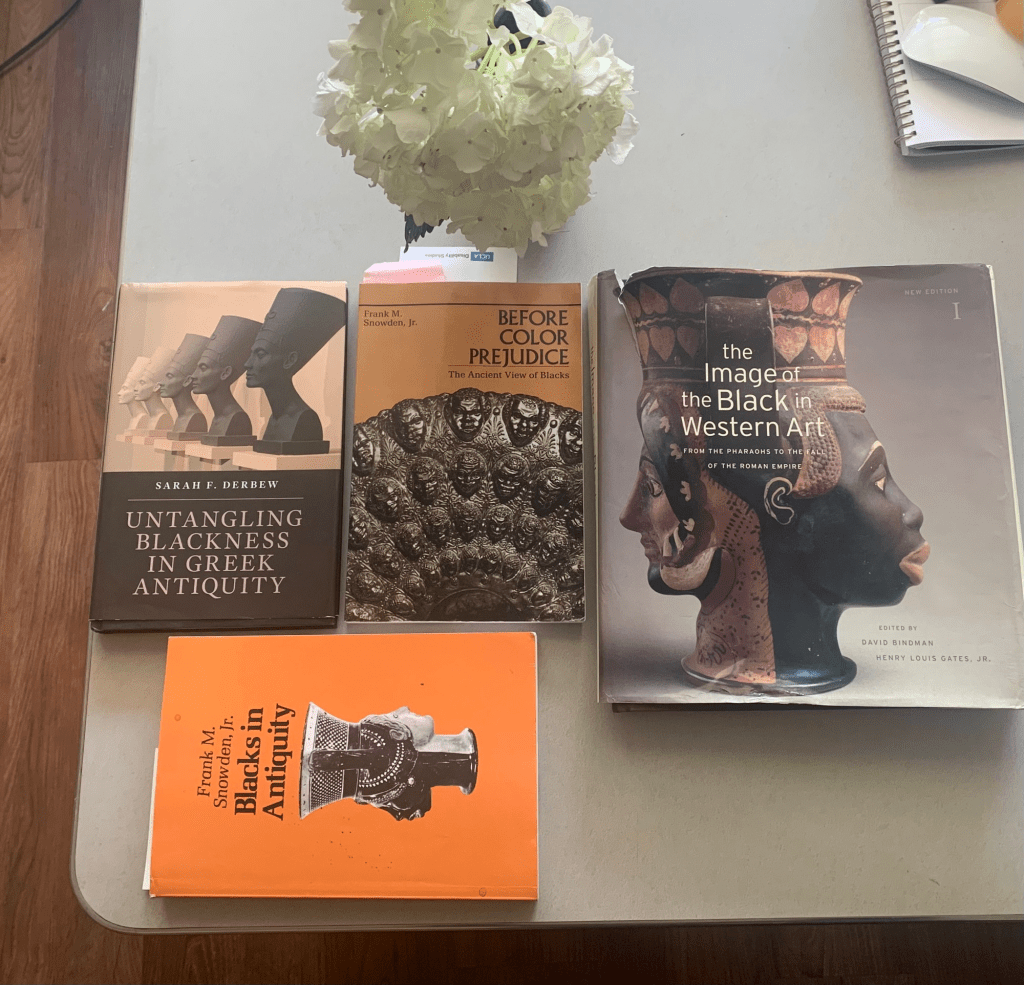
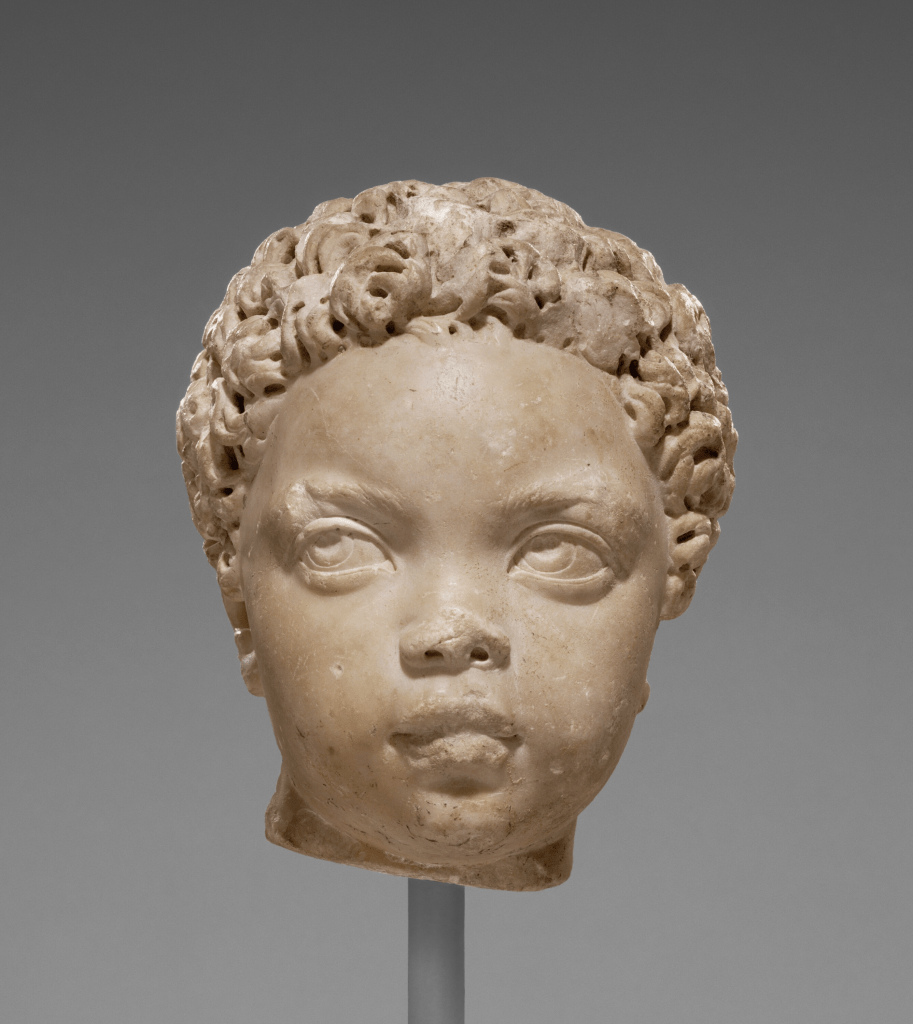


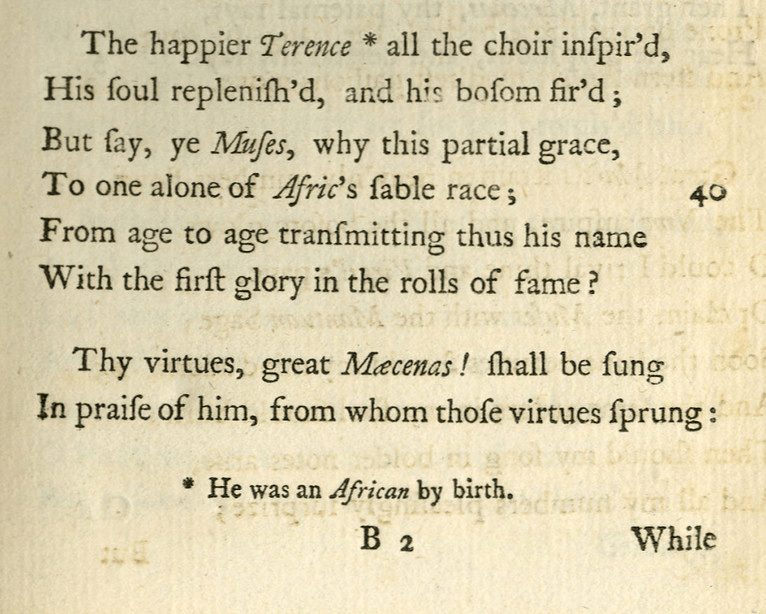
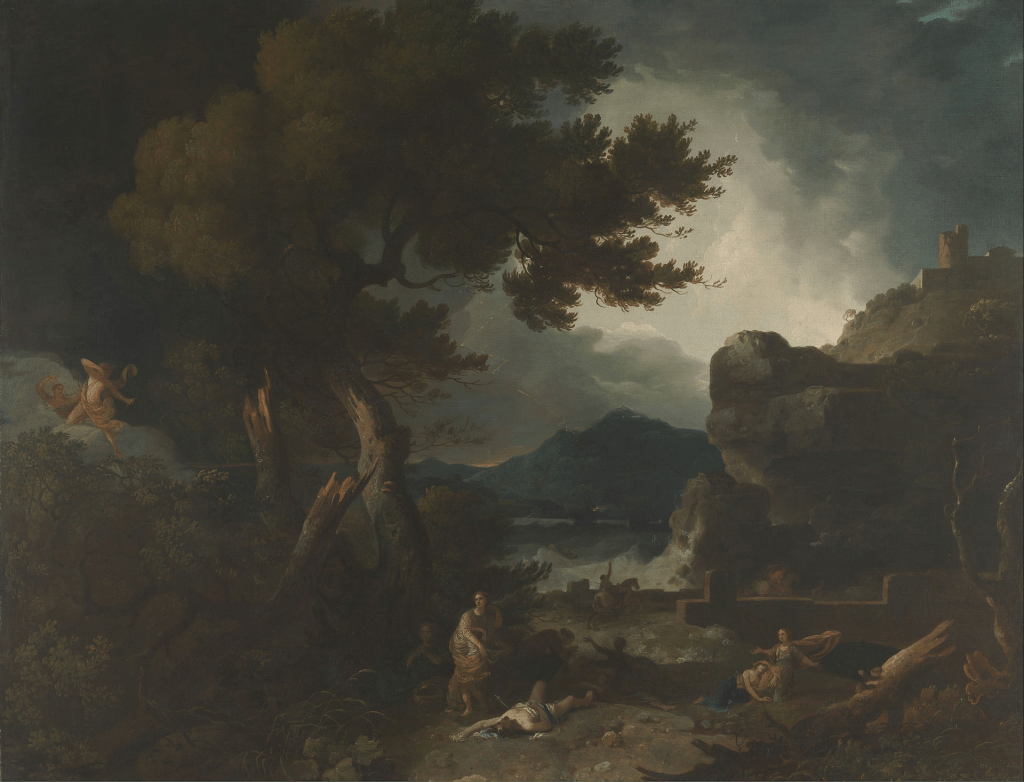
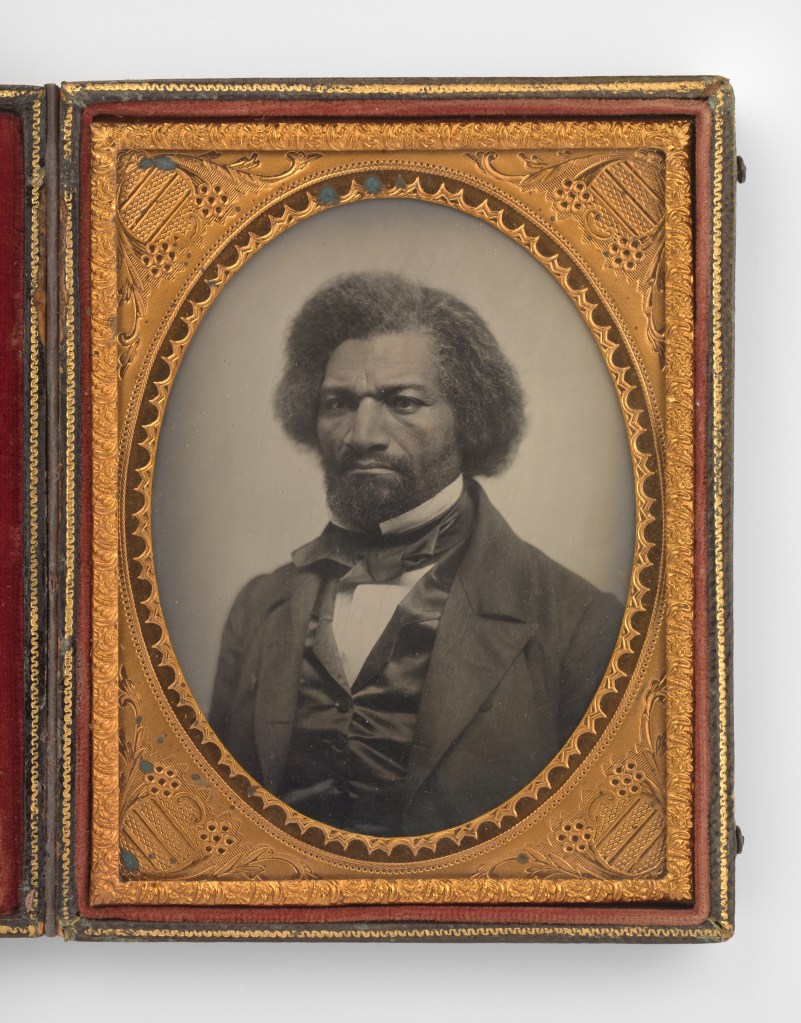


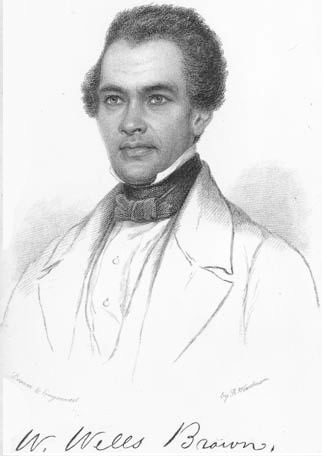
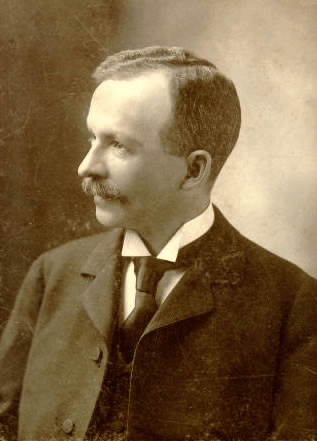
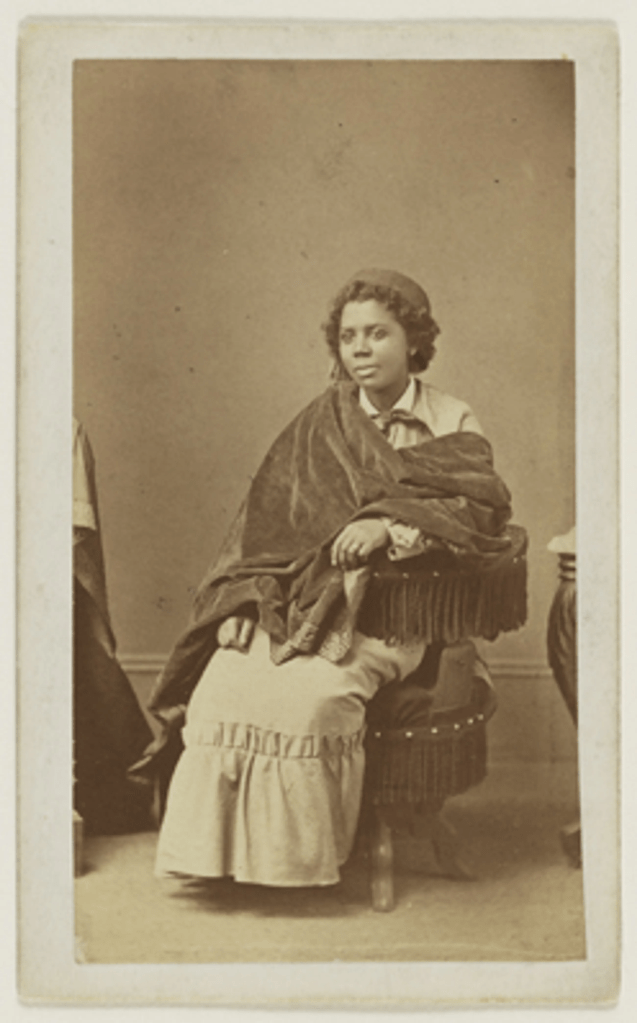

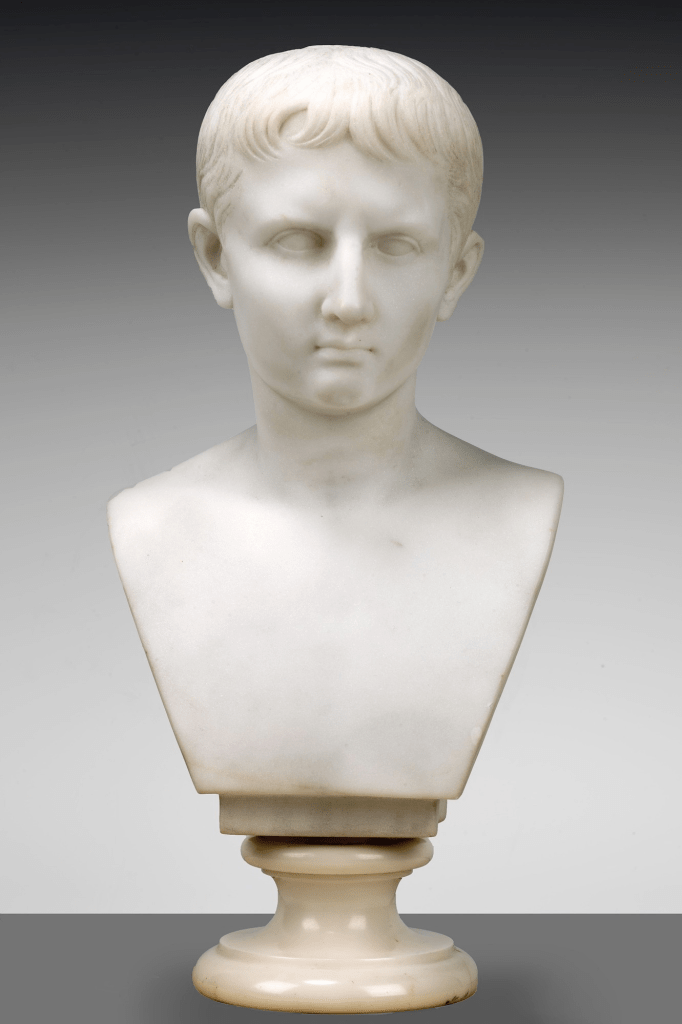





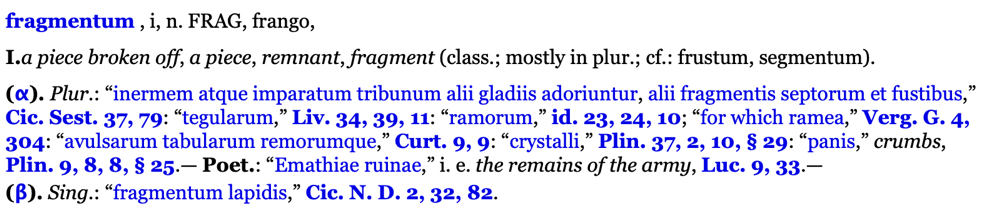
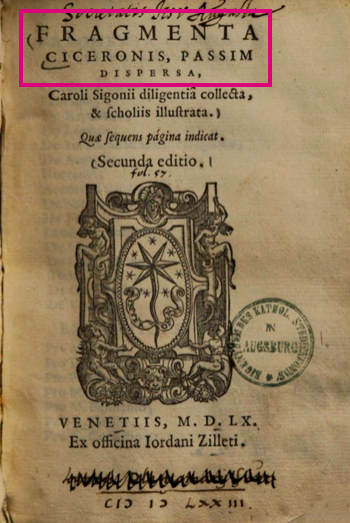
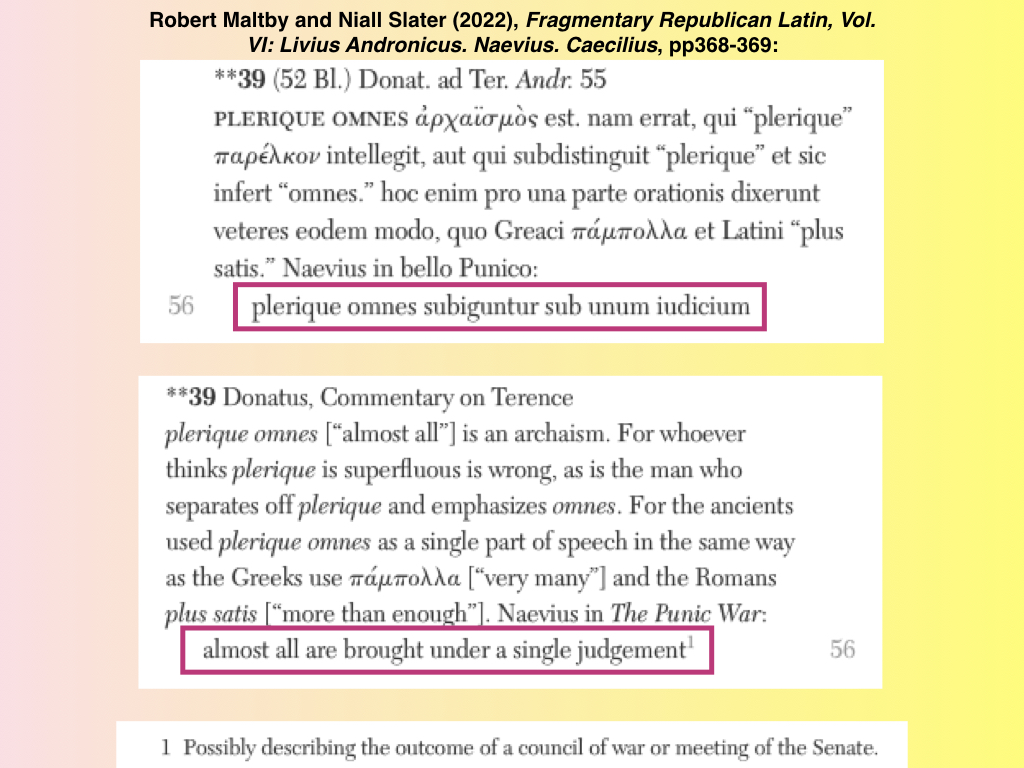
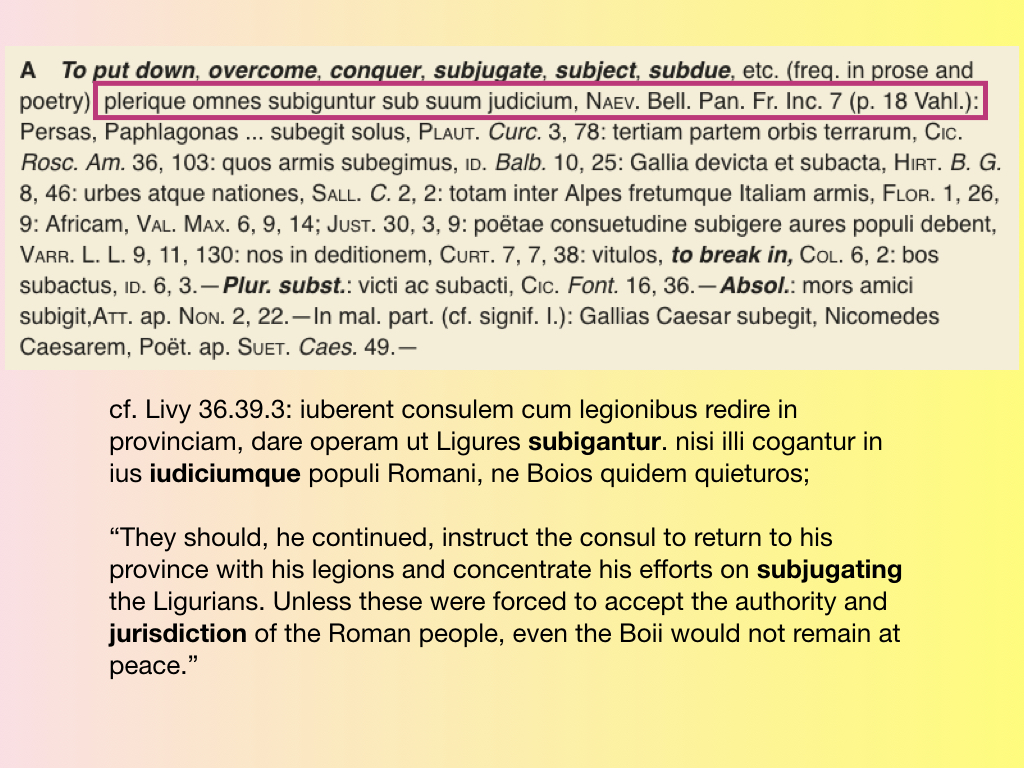
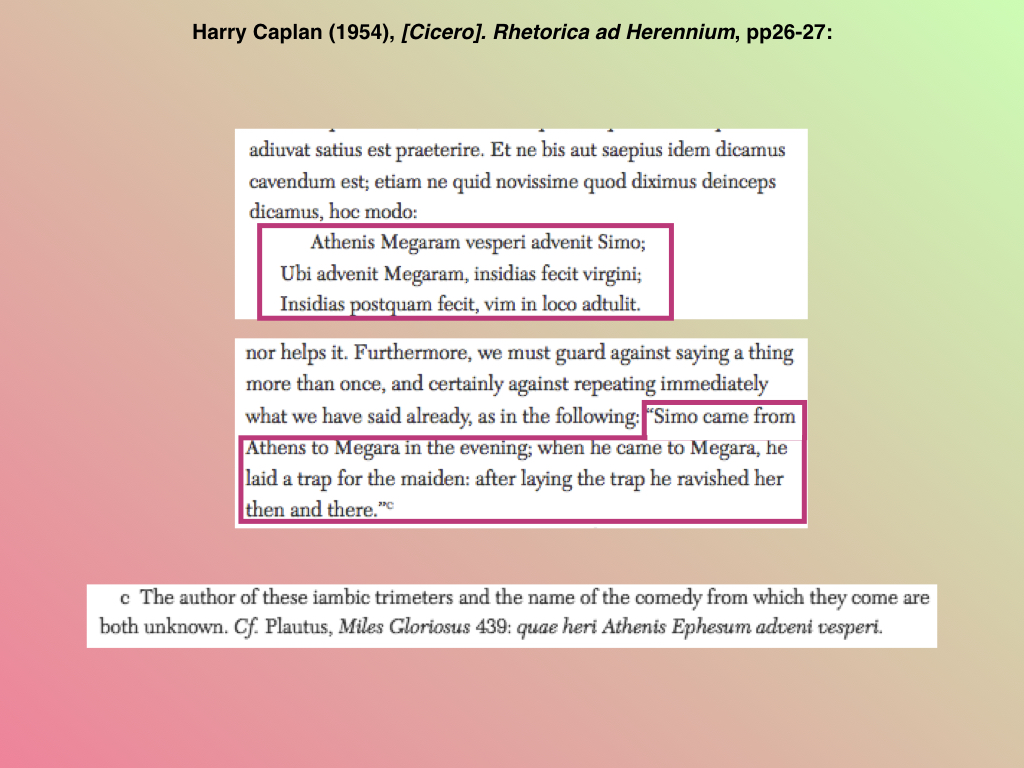
![neque vestis aut caelatum aurum et argentum, quo nostros veteres Marcellos Maximosque multi eunuchi e Syria Aegyptoque vicerunt
“neither raiment [clothing] nor gold and silver plate in which our ancient heroes, Marcelli and Maximi were outdone by many eunuchs from Syria and Egypt.”](https://opietasanimi.com/wp-content/uploads/2023/04/sympathy-for-fragments-copy.004.jpeg?w=1024)


 o pietas animi


.jpg)


.jpg)